
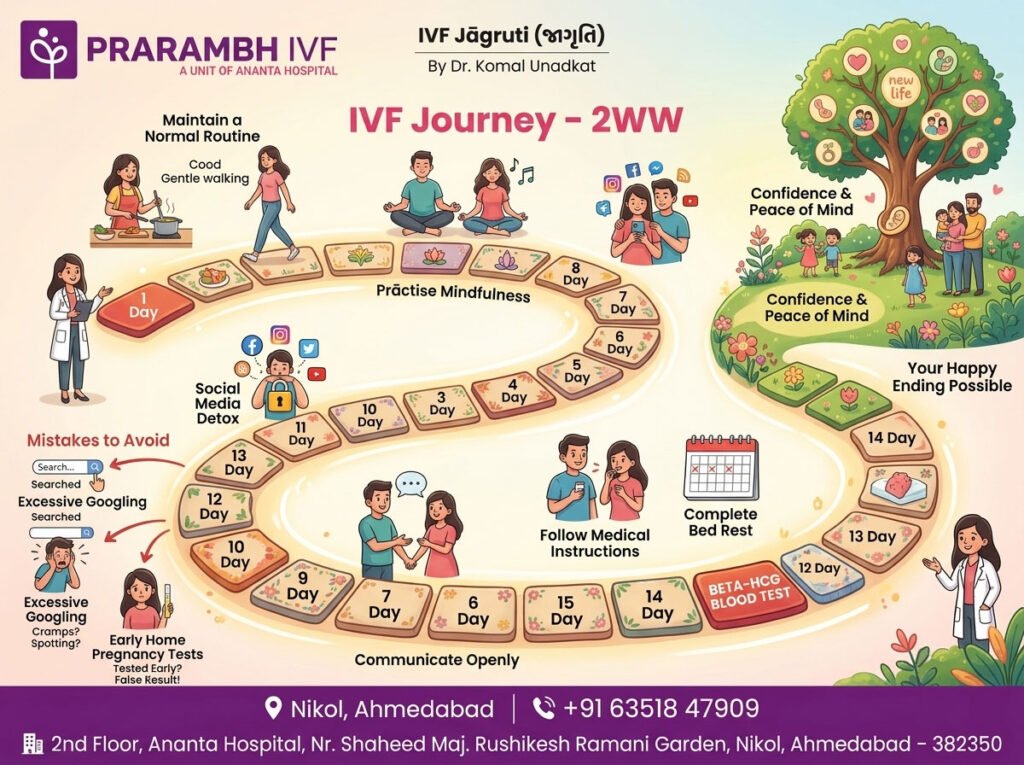
The 14 days following an embryo transfer are often described by couples as the most emotionally intense and challenging phase of the entire IVF journey. Known medically and affectionately as the “Two-Week Wait” (2WW), these two weeks can feel like years when you are eagerly awaiting news about your future family.
In our latest IVF Awareness (જાગૃતિ) Video Series, Dr. Komal Unadkat (IVF Specialist & Fertility Expert at Prarambh IVF, Ahmedabad) breaks down what actually happens inside your body during this crucial time, common pitfalls to avoid, and how to navigate this waiting period with confidence and peace of mind.
What Happens Inside Your Body During the 2WW?
Once the embryo transfer is complete, the implantation process begins. The embryo attempts to attach itself to the lining of your uterus.
While there are no visible external signs during this process, your body is working hard behind the scenes. Because you cannot “see” or “feel” implantation directly, it is easy to become anxious and over-analyze every minor bodily sensation.
2 Common Mistakes Couples Make During the Waiting Period
1. Excessive “Googling” of Symptoms
It is natural to look for early signs of success, but searching symptoms on Google often causes unnecessary panic:
- “Are cramps a good sign?”
- “Is light spotting a bad sign?”
The Reality: The progesterone medications prescribed after your embryo transfer naturally produce symptoms very similar to early pregnancy (or PMS), such as bloating, fatigue, and mild cramping. Therefore, bodily symptoms alone cannot accurately predict whether implantation has occurred.
2. Taking Early Home Pregnancy Tests
Testing too early at home using urine strips frequently leads to false positives or false negatives, causing emotional distress.
- Early testing can pick up residual hormones from previous medications.
- A true, reliable confirmation is only achieved through a Beta-HCG blood test conducted 12 to 14 days after the transfer.
Practical Tips to Manage the 14-Day Wait Safely
Instead of letting anxiety take over, Dr. Komal Unadkat recommends focusing on these simple daily practices:
- Maintain a Normal Routine: Engage in light, enjoyable activities like daily gentle walking, cooking, or reading.
- Practise Mindfulness: Spend a few minutes daily on light meditation or listening to calming music to prevent overthinking.
- Take a Social Media Detox: Avoid reading other people’s success or failure stories online during this period. Remember, every individual’s fertility journey is unique.
- Communicate Openly with Your Partner: Expressing your fears and feelings to your spouse can significantly lighten the emotional weight.
- Follow Medical Instructions Diligently: Take all prescribed medications strictly on time as directed by your fertility team.
💡 Important Note on Rest: Complete bed rest is NOT required or recommended after an embryo transfer. Staying lightly active improves blood flow and helps keep your mind occupied. Peace of mind is far more beneficial than lying in bed all day!
Need Guidance on Your IVF Journey?
At Prarambh IVF, we believe in providing transparent, compassionate, and evidence-based care to guide you through every step of your fertility journey.
- 🏢 Location: 2nd Floor, Ananta Hospital, Nr. Shaheed Maj. Rushikesh Ramani Garden, Nikol, Ahmedabad – 382350
- 📞 Call / WhatsApp: +91 63518 47909
- ✨ Prarambh IVF – Ek Navi Sharuaat
