
Understanding IVF Treatment
In vitro fertilization (IVF) is a widely recognized assisted reproductive technology that provides hope to couples struggling with infertility. The term “in vitro” translates to “in glass,” signifying that fertilization occurs in a laboratory setting rather than inside the woman’s body. IVF is a multi-step process that involves several crucial stages, including egg retrieval, fertilization, and embryo transfer, allowing prospective parents to overcome various fertility challenges.
When to Consider IVF
Couples may turn to IVF when they face difficulties conceiving naturally. Common reasons include age-related fertility decline, fallopian tube issues, ovulation disorders, endometriosis, sperm quality concerns, and unexplained infertility. IVF can also be an option for individuals and couples using donor eggs or sperm, as well as for same-sex couples seeking to expand their families.
The IVF Process Explained
The IVF process typically begins with a thorough evaluation by a fertility specialist at an IVF clinic. This assessment may include blood tests, ultrasounds, and a detailed medical history to identify any underlying issues. Once a personalized treatment plan is established, the following steps often occur:
Ovarian Stimulation
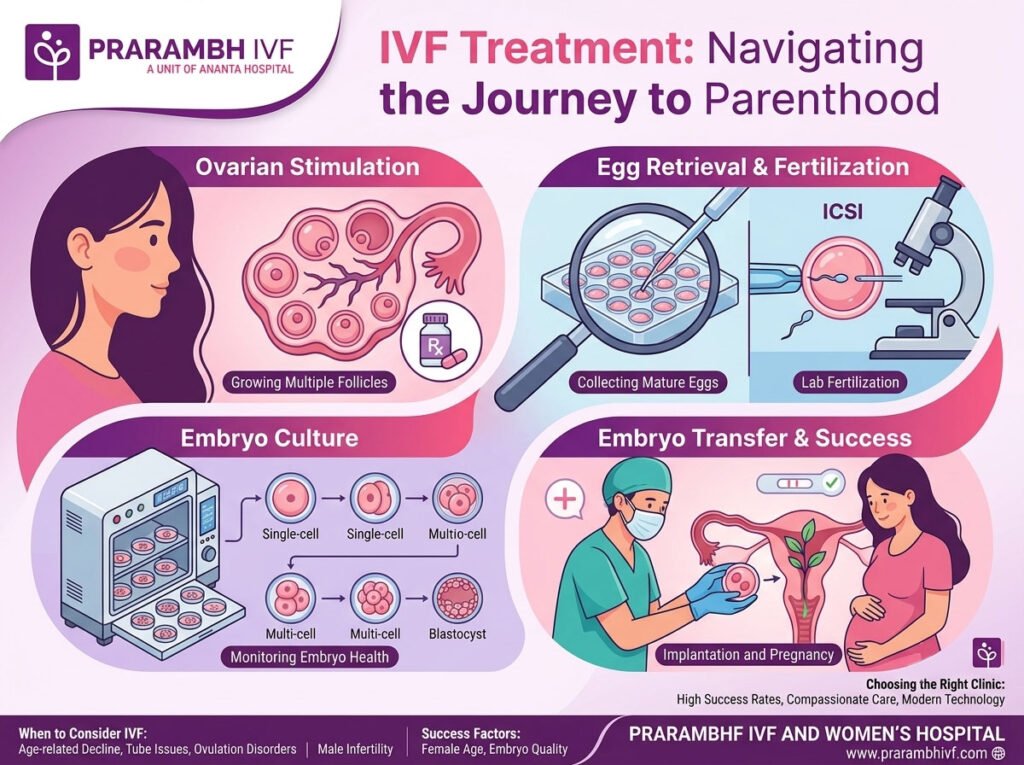
The treatment journey begins with ovarian stimulation, where fertility medications are prescribed to promote the growth of multiple follicles in the ovaries. Monitoring through blood tests and ultrasounds ensures that the follicles mature appropriately. The goal is to retrieve several eggs, increasing the chances of a successful pregnancy.
Egg Retrieval
Once the eggs are ready for retrieval, a minor surgical procedure is performed, usually under sedation. A thin needle is guided through the vaginal wall and into the ovaries to collect the mature eggs. Following retrieval, these eggs are evaluated for quality and viability.
Fertilization
The next step involves fertilizing the retrieved eggs with sperm, which can be from a partner or a donor. In some cases, a technique called intracytoplasmic sperm injection (ICSI) may be used, wherein a single sperm is directly injected into an egg. After fertilization, the embryos are monitored as they develop in the lab.
Embryo Transfer
After several days of embryo culture, the healthiest embryos are selected for transfer. This procedure is relatively simple and involves placing one or more embryos into the uterus through a thin catheter. If successful, the embryo will implant in the uterine lining, leading to pregnancy.
Success Rates and Factors Influencing Outcomes
The success rates of IVF treatment can vary significantly based on several factors, including the woman’s age, the cause of infertility, and the quality of the embryos. While age is a pivotal factor, improvements in technology and individualized treatment plans continue to enhance positive outcomes for many couples. At a reputable fertility clinic, patients receive comprehensive support, including counseling and guidance throughout the process.
Emotional and Financial Considerations
IVF can be an emotional rollercoaster, filled with anticipation, hope, and sometimes disappointment. It’s essential for individuals and couples to approach this journey with emotional support. Fertility clinics often provide counseling services and support groups to help navigate the psychological aspects of treatment.
Financial considerations are also crucial, as IVF can be an expensive process not always covered by insurance. Couples should inquire about financial assistance programs, payment plans, and any potential insurance coverage options at their chosen fertility clinic, allowing them to make informed decisions regarding their treatment.
Choosing the Right Fertility Clinic
When looking for an IVF clinic, research is key. Consider factors such as the clinic’s success rates, the experience and qualifications of the staff, available technologies, and patient reviews. A supportive and compassionate environment can significantly enhance the overall experience, ensuring that hopeful parents feel cared for and informed during their journey.
Conclusion
IVF treatment provides a powerful opportunity for individuals and couples to pursue parenthood, giving them a chance to realize their dreams of family. While this process may present challenges, advancements in reproductive technology and personalized support from skilled professionals can make a significant difference in outcomes. If you are considering IVF, reach out to your local fertility clinic to discuss your options and embark on this hopeful journey toward parenthood.
