
Introduction to IVF and ICSI
In the world of reproductive medicine, In Vitro Fertilization (IVF) and Intracytoplasmic Sperm Injection (ICSI) are two prominent techniques that have helped countless couples achieve their dream of parenthood. While both procedures are used to address infertility, they differ significantly in methods and applications. Understanding these differences can empower you to make informed decisions about your fertility treatment options.
What is IVF?
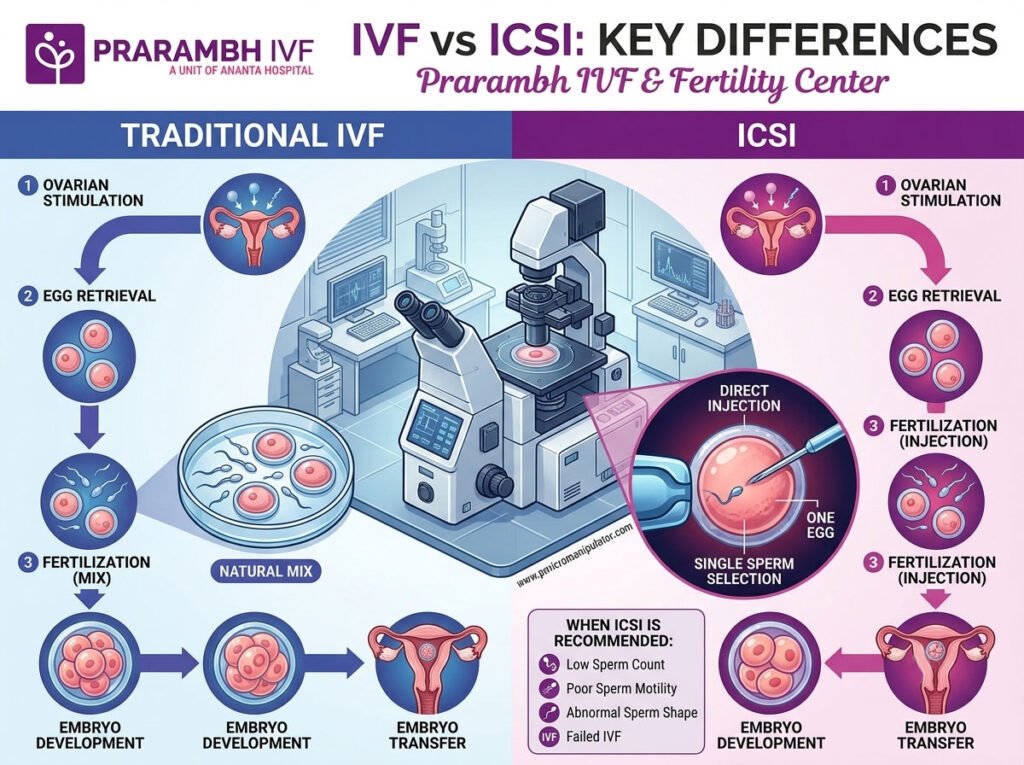
In Vitro Fertilization (IVF) is a multi-step procedure that involves stimulating the ovaries to produce multiple eggs, retrieving those eggs, fertilizing them with sperm in a laboratory setting, and subsequently transferring the resulting embryos to the uterus. The IVF process typically includes ovarian stimulation, egg retrieval, sperm collection, fertilization, and embryo transfer. This method is beneficial for various fertility issues, including blocked fallopian tubes, ovulation disorders, and advanced maternal age.
What is ICSI?
Intracytoplasmic Sperm Injection (ICSI) is a specialized form of IVF that is particularly effective for male infertility issues. In ICSI, a single sperm is injected directly into an egg, facilitating fertilization even in cases where sperm cannot penetrate the egg naturally. This technique is often recommended for men with low sperm count, poor sperm motility, or abnormal sperm morphology. ICSI is commonly performed as part of an IVF cycle, enhancing the fertilization rate and increasing the chances of successful embryo development.
Key Differences Between IVF and ICSI
The primary difference between IVF and ICSI lies in the fertilization process. In traditional IVF, sperm and eggs are placed together in a culture dish, where fertilization occurs naturally. In contrast, ICSI involves the direct injection of sperm into the egg, which may be necessary when there are specific male fertility concerns. Another notable difference is the selection of sperm; ICSI requires careful selection of a single healthy sperm, while IVF allows for a broader pool of sperm to interact with the eggs.
When is ICSI Recommended?
ICSI may be recommended based on several factors that affect male fertility. Common scenarios include:
- Low sperm count (oligozoospermia)
- Poor sperm motility (asthenozoospermia)
- Abnormal sperm shape (teratozoospermia)
- Previous failed IVF cycles
- Unexplained infertility after a fertility assessment
In many cases, ICSI might be utilized as part of the overall IVF process to improve chances of fertilization and increase the likelihood of a successful pregnancy.
How Prarambh IVF & Fertility Center Can Help You
At Prarambh IVF & Fertility Center, we understand that every fertility journey is unique. Our experienced fertility specialists work closely with you to develop personalized treatment plans tailored to your specific needs. Whether you are considering IVF, ICSI, or a combination of both, our team is dedicated to guiding you through each step of the process, ensuring you’re fully informed and comfortable with your treatment options.
Transparent communication is at the heart of our practice. We ensure that you understand the differences between IVF and ICSI along with the potential outcomes, risks, and benefits associated with each method. Our supportive environment fosters open discussions about your feelings and concerns, allowing you and your partner to make confident decisions about your fertility journey.
Moreover, we recognize that navigating infertility can be emotionally taxing. Our dedicated team at Prarambh IVF & Fertility Center places great emphasis on providing emotional support throughout the treatment process. From counseling services to support groups, we are here for you every step of the way, with compassion and understanding.
Conclusion
Understanding the difference between ICSI and IVF is crucial in choosing the right path for your fertility treatment. At Prarambh IVF & Fertility Center, we are committed to helping you navigate these options with care and expertise. If you have questions or would like to learn more about our services, please don’t hesitate to reach out to us. Your journey to parenthood is important, and we are here to provide the support you need.
