
What is a Blastocyst?
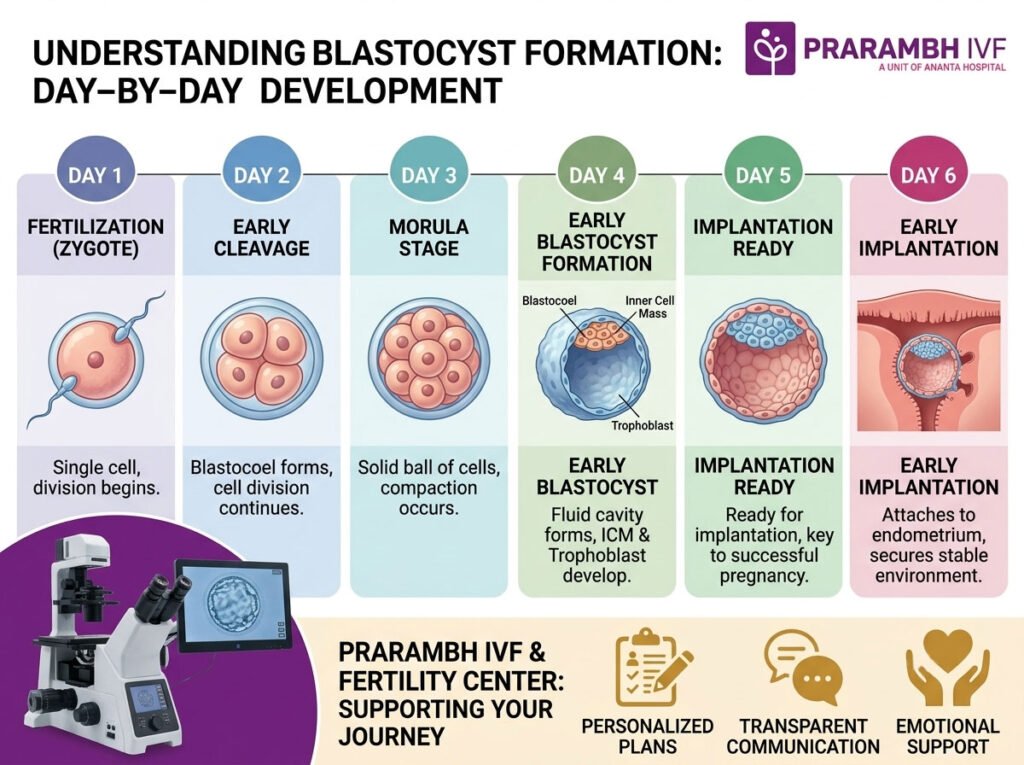
Blastocyst formation is a pivotal stage in human embryonic development that occurs after fertilization. It is essential for successful implantation and pregnancy. A blastocyst is formed approximately five to six days after fertilization and is a hollow ball of cells that has differentiated into two distinct cell types: the inner cell mass, which will develop into the embryo, and the trophoblast, which will eventually form the placenta. Understanding this timeline and what happens at each stage can help individuals and couples seeking IVF and fertility treatments grasp the complexities of the process.
Day 1: Fertilization
On day one, sperm fertilizes the egg, forming a zygote. This single-cell organism begins to divide through a process called cleavage. The zygote becomes a two-cell stage within about 24 hours. Each division is crucial, as the resulting cells will eventually differentiate into various types necessary for development.
Day 2: Early Cleavage
By day two, the zygote has divided into four cells, known as blastomeres. These cells continue to grow and divide, undergoing a series of rapid cell divisions, which is a hallmark of early embryonic development. During this stage, cells may still appear somewhat similar in structure but will prepare to differentiate into specialized cell types.
Day 3: Morula Stage
On day three, the embryo reaches the morula stage with around 8 to 16 cells. The cells in the morula are tightly packed together, forming a solid ball. Compaction occurs, where the cells begin to form tight junctions, leading to the next stage of development and setting the groundwork for the blastocyst to form. Nutrients from the surrounding environment are still utilized at this stage.
Day 4: Early Blastocyst Formation
By day four, the embryo has reached a blastocyst stage where it begins to form a fluid-filled cavity known as the blastocoel. The inner cell mass starts to form, which will eventually become the embryo. The outer layer, called the trophectoderm, consists of cells that will help implant the blastocyst into the uterine lining. This stage is crucial as the embryo prepares for the next step towards implantation.
Day 5: Implantation Ready
On day five, the blastocyst is fully formed and is typically ready for implantation into the uterus. By this time, it has developed a fully formed inner cell mass and a trophoblast. If the timing is right with the uterine lining, implantation can begin, making this a critical point in achieving a successful pregnancy. Embryologists often monitor this stage closely when performing embryo transfers during IVF treatments.
Day 6: Early Implantation
On day six, the blastocyst begins the process of implantation. The trophoblast cells attach to the endometrium (the inner lining of the uterus) and start invading the tissue to secure a stable environment for growth. Early implantation is critical for the survival of the embryo, as it relies on maternal support for nutrients and hormones.
How Prarambh IVF & Fertility Center Can Help You
At Prarambh IVF & Fertility Center, we understand that navigating the journey of fertility treatments can be both exciting and daunting. Our experienced fertility specialists provide personalized treatment plans tailored to each patient’s unique circumstances. We take the time to explain every phase of your treatment, including the intricacies of blastocyst development, to ensure you feel informed and empowered throughout your journey.
We also prioritize transparent communication and emotional support, recognizing that understanding blastocyst formation and its implications for pregnancy is just one part of the broader fertility experience. Our team is committed to being there for you not only with medical expertise but also with compassion, helping patients cope with the emotional ups and downs of fertility treatments. We believe that a supportive environment enhances the overall experience and can lead to better outcomes.
Conclusion
If you are exploring options for IVF treatment or seeking a deeper understanding of blastocyst formation and its role in successful pregnancies, don’t hesitate to reach out. At Prarambh IVF & Fertility Center, we are here to support you every step of the way. Contact us today to learn more about how we can assist you on your journey to starting or expanding your family.
