
The landscape of reproductive medicine has undergone a seismic shift as we move through 2026. For couples struggling to conceive, the technologies available today at clinics like Prarambh IVF offer higher success rates, more personalized protocols, and safer procedures than ever before.
This comprehensive guide explores the latest breakthroughs in fertility treatments, ensuring you have the knowledge to make informed decisions on your journey to parenthood.
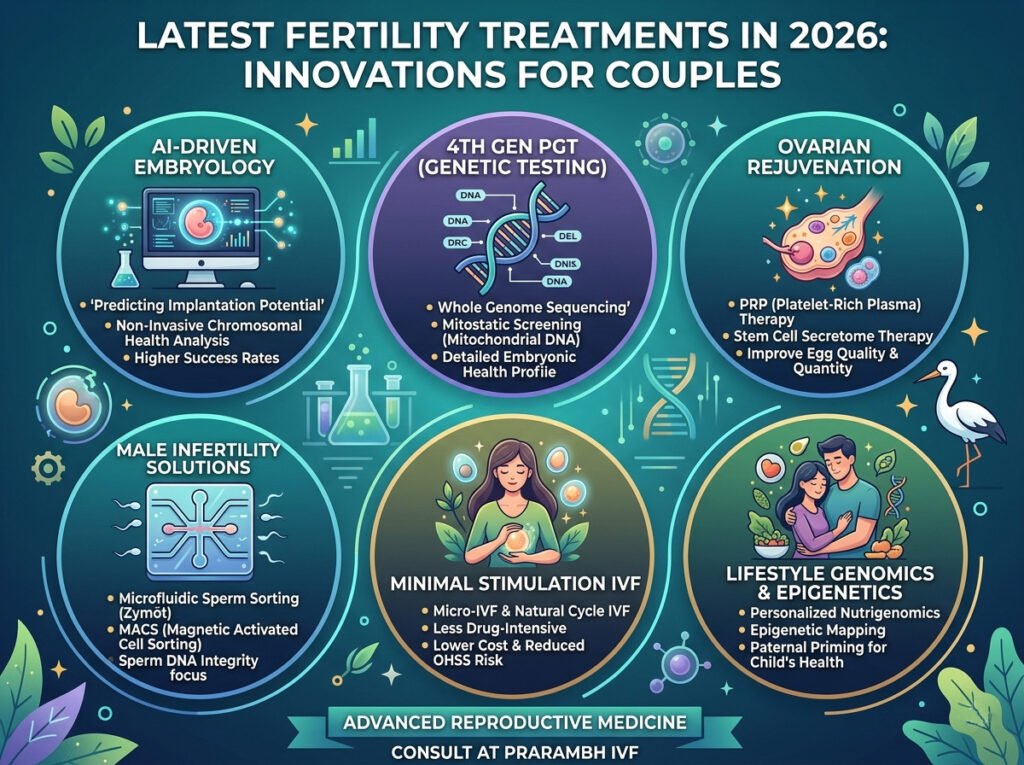
1. The Dawn of AI-Driven Embryology
In 2026, Artificial Intelligence (AI) is no longer a futuristic concept but a standard of care in the IVF lab. Traditionally, embryologists manually graded embryos based on visual appearance. Today, AI algorithms analyze thousands of data points from time-lapse imaging to predict which embryo has the highest implantation potential.
- Precision Grading: AI can detect microscopic patterns invisible to the human eye, reducing the “trial and error” often associated with multiple IVF cycles.
- Non-Invasive Selection: By analyzing the culture medium (the liquid surrounding the embryo), AI can help determine chromosomal health without the need for a physical biopsy.
2. Fourth-Generation PGT (Preimplantation Genetic Testing)
Genetic screening has evolved into PGT-A 4.0. In 2026, we have moved beyond simply counting chromosomes.
- Whole Genome Sequencing: New techniques allow for more detailed screening of polygenic risks (conditions caused by multiple genes), providing parents with a clearer picture of embryonic health.
- Mitostatic Screening: We can now measure the “energy levels” or mitochondrial DNA of an embryo. Embryos with optimal mitochondrial scores are more likely to result in a successful, full-term pregnancy.
3. Ovarian Rejuvenation (PRP and Stem Cell Therapy)
For women with Diminished Ovarian Reserve (DOR) or Premature Ovarian Insufficiency (POI), 2026 has brought the gift of “Ovarian Rejuvenation.”
- PRP (Platelet-Rich Plasma): By injecting a concentration of the patient’s own platelets into the ovaries, doctors are seeing a “reawakening” of dormant follicles. This often allows women to use their own eggs rather than turning to donor eggs.
- Stem Cell Secretome Therapy: Advanced clinics are utilizing signaling molecules from stem cells to repair ovarian tissue, improving both egg quantity and quality in older reproductive ages.
4. Advanced Male Infertility Solutions: Microfluidics and MACS
Male factor infertility accounts for nearly 50% of conception challenges. In 2026, the focus has shifted from simple sperm count to Sperm Quality and Integrity.
- Microfluidic Sperm Sorting (Zymōt): Instead of using high-speed centrifuges that can damage sperm DNA, microfluidic chips mimic the natural path of the vaginal canal. Only the most motile, DNA-intact sperm can navigate the channels.
- MACS (Magnetic Activated Cell Sorting): This technique uses magnetic beads to “catch” and remove apoptotic (dying) sperm cells, ensuring only the healthiest sperm are used for ICSI.
5. Micro-IVF and Natural Cycle IVF
As patients seek more “holistic” or less drug-intensive options, Micro-IVF has gained popularity in 2026.
- How it works: Rather than high doses of hormones to produce 15–20 eggs, Micro-IVF uses minimal stimulation to produce 2–5 high-quality eggs.
- Benefits: This reduces the risk of Ovarian Hyperstimulation Syndrome (OHSS), lowers the cost of medication, and is significantly less taxing on the woman’s body.
6. The “Artificial Womb” and Uterine Transplant Milestones
While still highly specialized, 2026 has seen a rise in successful uterine transplants for women with Uterine Factor Infertility (UFI).
Furthermore, Endometrial Receptivity Analysis (ERA) has become hyper-precise. Using transcriptomics, doctors can now identify the exact “Window of Implantation” down to a 4-hour margin, ensuring the embryo is transferred at the perfect physiological moment.
7. Lifestyle Genomics and Epigenetics
Modern fertility care at Prarambh IVF now includes Epigenetic Mapping. We understand that the environment (diet, stress, toxins) affects how genes are expressed in both eggs and sperm.
- Nutrigenomics: Personalized fertility diets based on your genetic makeup to reduce inflammation.
- Paternal Priming: 2026 protocols emphasize preparing the father’s health three months prior to conception to improve the epigenetic health of the future child.
8. Choosing the Right Partner: Why Prarambh IVF?
Navigating these advanced technologies requires a blend of high-tech infrastructure and high-touch compassion. At Prarambh IVF, we integrate these 2026 innovations into a patient-centric model.
- Transparent Success Rates: We provide data-backed expectations using the latest AI forecasting.
- Holistic Support: Fertility is as much emotional as it is physical. Our 2026 protocols include integrated mental health support and stress-reduction therapies.
Conclusion: A New Era of Hope
The “Latest Fertility Treatments in 2026” signify a move toward personalized reproductive medicine. We no longer treat “infertility” as a broad category; we treat the specific biological roadblocks of each couple.
If you are beginning your journey or have faced disappointments in the past, the advancements of 2026 offer new pathways that were impossible even five years ago.
Take the first step toward your future. Visit Prarambh IVF to consult with our specialists and discover which of these 2026 breakthroughs is right for you.
