
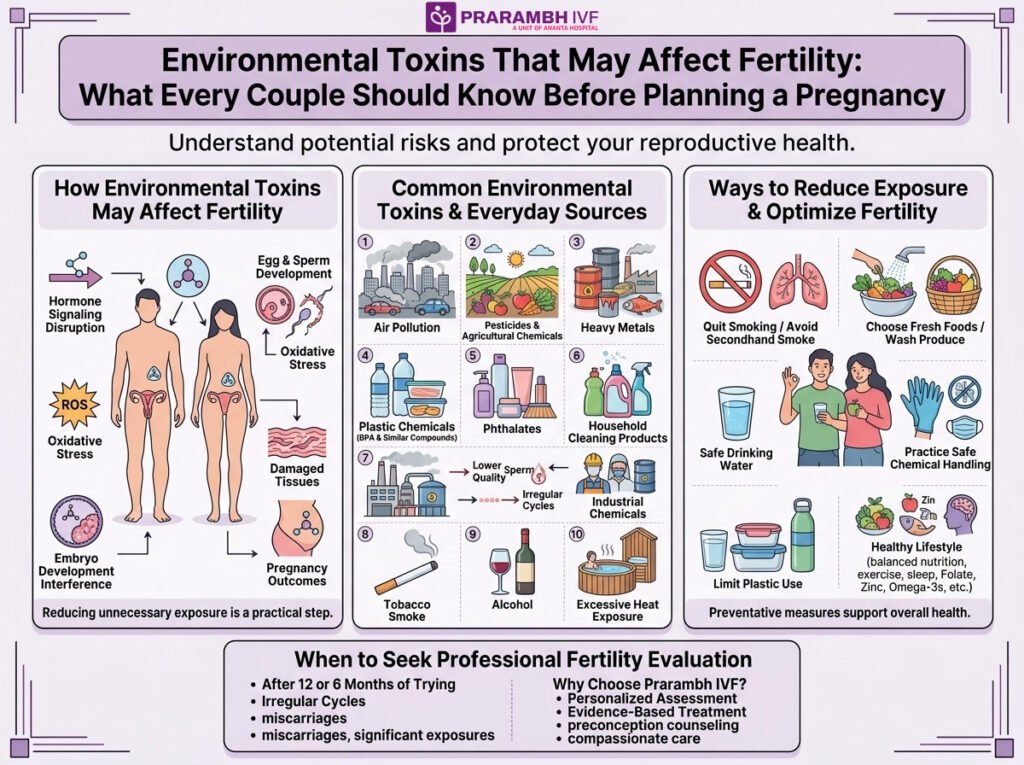
Planning for a baby is an exciting milestone, but fertility depends on more than age, genetics, and overall health. Increasing research suggests that environmental toxins may also play a role in reproductive health. While occasional exposure to everyday chemicals is often unavoidable, long-term or high-level exposure to certain environmental pollutants may influence fertility in both men and women.
It’s important to remember that environmental toxins are just one of many factors that can affect fertility, and exposure does not necessarily mean a person will experience infertility. However, understanding potential risks and making informed lifestyle choices can support overall reproductive health.
At Prarambh IVF, we believe that fertility care begins with education, prevention, and personalized evaluation. Along with advanced fertility treatments, our specialists guide couples on healthy lifestyle practices that may help optimize their chances of conception.
In this comprehensive guide, we’ll explore what environmental toxins are, how they may affect fertility, common sources of exposure, ways to reduce risks, and when to seek professional fertility advice.
What Are Environmental Toxins?
Environmental toxins are substances found in the air, water, soil, food, or everyday products that may have harmful effects on human health when exposure occurs at certain levels or over long periods.
Some environmental chemicals may interfere with the body’s hormonal system, reproductive organs, or the development of eggs and sperm. These substances are often referred to as endocrine-disrupting chemicals (EDCs) because they can influence hormone signaling.
While research continues to evolve, reducing unnecessary exposure to known or suspected reproductive toxins is a practical step for couples planning a pregnancy.
How Can Environmental Toxins Affect Fertility?
Human reproduction depends on a delicate balance of hormones, healthy eggs, healthy sperm, and properly functioning reproductive organs.
Certain environmental exposures may influence fertility by:
- Altering hormone production
- Affecting egg development
- Reducing sperm quality
- Increasing oxidative stress
- Damaging reproductive tissues
- Interfering with embryo development
- Affecting pregnancy outcomes
Not everyone exposed to these substances will experience fertility problems, and many factors—including genetics, age, overall health, and duration of exposure—contribute to individual risk.
Why Fertility Is Sensitive to Environmental Factors
Both eggs and sperm are highly specialized reproductive cells.
Women are born with all the eggs they will ever have, making long-term reproductive health particularly important. Men continuously produce sperm throughout adulthood, but sperm production takes approximately 70–90 days, meaning recent environmental and lifestyle exposures may influence sperm quality.
Because reproductive cells are sensitive to oxidative stress and hormonal changes, reducing unnecessary exposure to environmental toxins may help support fertility.
Common Environmental Toxins That May Affect Fertility
1. Air Pollution
Air pollution contains tiny particles and gases produced by vehicles, industrial activities, construction, and burning fuels.
Research has explored possible associations between long-term air pollution exposure and:
- Reduced sperm quality
- Hormonal changes
- Irregular menstrual cycles
- Pregnancy complications
- Reduced reproductive health
Although more research is ongoing, limiting exposure to heavily polluted environments whenever possible may be beneficial.
Ways to Reduce Exposure
- Monitor local air quality reports.
- Avoid outdoor exercise during periods of poor air quality.
- Use indoor air purifiers if appropriate.
- Keep windows closed during high pollution days.
2. Pesticides and Agricultural Chemicals
Pesticides are widely used in agriculture to control insects, weeds, and plant diseases.
Occupational exposure among agricultural workers may be higher than exposure in the general population.
Some studies suggest prolonged pesticide exposure may affect:
- Sperm production
- Hormone levels
- Ovulation
- Embryo development
Practical Tips
- Wash fruits and vegetables thoroughly.
- Peel produce when appropriate.
- Wear protective equipment if working with pesticides.
- Follow safety guidelines for chemical handling.
3. Heavy Metals
Certain heavy metals may have harmful effects on reproductive health when exposure is excessive.
Examples include:
- Lead
- Mercury
- Cadmium
- Arsenic
Potential sources include:
- Industrial workplaces
- Contaminated water
- Old paint
- Batteries
- Certain types of seafood (for mercury)
Fertility Concerns
High levels of heavy metal exposure have been associated with:
- Reduced sperm quality
- Hormonal disruption
- Menstrual irregularities
- Pregnancy complications
Exposure risk depends on the level, duration, and source.
4. Plastic Chemicals (BPA and Similar Compounds)
Many plastic containers contain chemicals such as Bisphenol A (BPA) or similar compounds.
BPA has been studied because it may interact with hormone receptors.
Possible exposure sources include:
- Food containers
- Plastic bottles
- Thermal paper receipts
- Food packaging
Reducing Exposure
- Avoid heating food in plastic containers.
- Choose glass or stainless steel containers when possible.
- Limit the use of damaged plastic containers.
- Check product labels for BPA-free alternatives.
5. Phthalates
Phthalates are chemicals used to make plastics flexible and are found in many consumer products.
Common sources include:
- Vinyl flooring
- Shower curtains
- Cosmetics
- Perfumes
- Personal care products
- Food packaging
Some studies have investigated possible links between phthalate exposure and reproductive health, although findings vary.
Choosing fragrance-free products and minimizing unnecessary plastic use may help reduce exposure.
6. Household Cleaning Products
Many cleaning products contain strong chemicals that may irritate the respiratory system or skin.
Although occasional household use is generally considered safe when products are used correctly, prolonged occupational exposure may warrant additional precautions.
Safety tips include:
- Ensure good ventilation.
- Wear gloves when needed.
- Follow manufacturer instructions.
- Avoid mixing cleaning chemicals.
7. Industrial Chemicals
People working in certain industries may encounter chemicals that require strict safety measures.
Examples include:
- Solvents
- Paints
- Manufacturing chemicals
- Petroleum products
Employers should provide appropriate protective equipment and workplace safety training to minimize exposure.
8. Tobacco Smoke
Smoking remains one of the most well-established lifestyle factors affecting fertility.
Cigarette smoke contains thousands of chemicals that may negatively affect reproductive health.
In men, smoking has been associated with:
- Lower sperm count
- Reduced sperm motility
- Increased oxidative stress
- DNA damage in sperm
In women, smoking may contribute to:
- Reduced ovarian reserve
- Earlier menopause
- Lower fertility
- Increased pregnancy complications
Quitting smoking benefits both reproductive and overall health.
9. Alcohol
Heavy alcohol consumption may influence reproductive health by affecting hormone regulation and overall well-being.
Couples trying to conceive are encouraged to discuss alcohol intake with their healthcare provider.
Moderation and individualized medical advice are important.
10. Excessive Heat Exposure
Although heat is not a chemical toxin, prolonged exposure to high temperatures may affect sperm production.
Potential sources include:
- Frequent hot tubs
- Saunas
- High-temperature workplaces
Avoiding prolonged heat exposure may support healthy sperm production.
Environmental Toxins and Female Fertility
Female fertility depends on healthy eggs, regular ovulation, hormone balance, and a receptive uterus.
Some environmental exposures have been studied for possible associations with:
- Hormonal imbalance
- Reduced ovarian reserve
- Ovulation disorders
- Endometriosis
- Implantation challenges
The evidence varies depending on the specific toxin and level of exposure, and ongoing research continues to improve our understanding.
Environmental Toxins and Male Fertility
Male fertility may be influenced by environmental factors affecting sperm production and quality.
Potential impacts include:
- Reduced sperm count
- Lower sperm motility
- Abnormal sperm morphology
- Increased oxidative stress
- Sperm DNA damage
Not every exposed individual develops fertility problems, highlighting the importance of comprehensive medical evaluation.
Occupational Exposure and Fertility
Certain occupations involve increased exposure to chemicals or physical hazards.
Examples include:
- Agriculture
- Manufacturing
- Construction
- Printing
- Painting
- Chemical industries
- Mining
Workers should:
- Use recommended personal protective equipment (PPE).
- Follow workplace safety protocols.
- Attend occupational health assessments.
- Discuss concerns with healthcare providers if planning pregnancy.
Can Environmental Toxins Cause Infertility?
Environmental toxins may contribute to fertility problems, but they are rarely the sole cause.
Infertility usually results from a combination of factors such as:
- Age
- Genetics
- Hormonal disorders
- Medical conditions
- Lifestyle habits
- Environmental exposures
A thorough fertility evaluation helps identify the specific causes affecting each individual or couple.
How to Reduce Exposure to Environmental Toxins
While it is impossible to eliminate all environmental exposures, practical lifestyle choices can help minimize unnecessary risks.
Choose Fresh Foods
Whenever possible:
- Eat fresh fruits and vegetables.
- Reduce intake of highly processed foods.
- Store food in glass containers.
- Wash produce thoroughly.
Avoid Smoking
Quitting smoking remains one of the most effective ways to improve reproductive and overall health.
Avoid secondhand smoke whenever possible.
Drink Safe Water
Use clean drinking water from reliable sources.
If there are concerns about local water quality, appropriate filtration systems may be considered based on local recommendations.
Practice Safe Chemical Handling
When using paints, solvents, pesticides, or industrial chemicals:
- Wear protective gloves.
- Use masks if recommended.
- Ensure adequate ventilation.
- Follow product safety instructions.
Limit Plastic Use
Reduce unnecessary contact with plastics by:
- Choosing reusable glass containers.
- Avoiding microwaving plastic food containers.
- Using stainless steel water bottles.
Maintain a Healthy Lifestyle
Overall health supports reproductive health.
Focus on:
- Balanced nutrition
- Regular exercise
- Healthy body weight
- Adequate sleep
- Stress management
Nutrients That Support Reproductive Health
Although no diet can completely prevent infertility, good nutrition supports overall reproductive function.
Important nutrients include:
- Folate
- Zinc
- Selenium
- Iron
- Vitamin D
- Omega-3 fatty acids
- Vitamin C
- Vitamin E
It is best to obtain nutrients from a balanced diet unless supplements are recommended by a healthcare professional.
When Should You Seek Fertility Evaluation?
Couples should consider consulting a fertility specialist if:
- Pregnancy has not occurred after 12 months of regular unprotected intercourse.
- The female partner is 35 years or older and pregnancy has not occurred after six months.
- Menstrual cycles are irregular.
- There is a history of miscarriage.
- The male partner has known fertility concerns.
- There has been significant occupational exposure to reproductive hazards.
Early evaluation often provides more treatment options.
How Fertility Specialists Assess Environmental Risk
During a fertility consultation, your doctor may ask about:
- Occupation
- Smoking history
- Alcohol consumption
- Medication use
- Previous chemical exposure
- Home environment
- Dietary habits
- Medical history
This information helps guide individualized recommendations.
Common Myths About Environmental Toxins and Fertility
Myth 1: Everyday Chemical Exposure Always Causes Infertility
Fact: Most people encounter environmental chemicals daily without developing infertility. Risk depends on factors such as the type of substance, level and duration of exposure, and individual health.
Myth 2: Only Women Need to Worry About Environmental Toxins
Fact: Environmental exposures may affect both male and female reproductive health.
Myth 3: Organic Foods Guarantee Better Fertility
Fact: A balanced, nutritious diet is important for reproductive health. While reducing pesticide exposure may be beneficial, no single diet can guarantee improved fertility.
Myth 4: Fertility Problems Are Always Caused by Environmental Factors
Fact: Fertility is influenced by many factors, including age, genetics, hormones, medical conditions, and lifestyle. Environmental exposures represent only one piece of the overall picture.
Why Choose Prarambh IVF?
At Prarambh IVF, we recognize that successful fertility care extends beyond medical treatment. Our team provides comprehensive fertility evaluations that consider medical history, lifestyle, occupational exposures, and reproductive health to develop personalized care plans.
Our approach includes:
- Comprehensive fertility assessment for both partners
- Evidence-based diagnostic evaluation
- Individualized fertility treatment plans
- Advanced reproductive technologies
- Lifestyle and preconception counseling
- Compassionate patient-centered care
We are committed to helping couples make informed decisions throughout their fertility journey.
Frequently Asked Questions
Can environmental toxins permanently damage fertility?
Not necessarily. Some effects may be temporary, while others depend on the type, amount, and duration of exposure. A fertility specialist can evaluate your individual situation.
Should couples avoid all plastics when trying to conceive?
Completely avoiding plastics is often impractical. However, using glass or stainless steel containers when possible and avoiding heating food in plastic containers may help reduce unnecessary exposure.
Does air pollution always reduce fertility?
Current research suggests that long-term exposure to high levels of air pollution may be associated with reproductive health effects, but individual risk varies, and many factors influence fertility.
Can healthy lifestyle changes improve fertility?
Yes. A balanced diet, regular exercise, healthy body weight, avoiding smoking, limiting alcohol, and reducing unnecessary chemical exposure all support overall reproductive health.
Conclusion
Environmental toxins have become an important area of research in reproductive medicine, and growing evidence suggests that certain chemicals and pollutants may influence fertility in both men and women. However, fertility is complex, and environmental exposures represent only one of many factors that contribute to reproductive health.
The good news is that many potential exposures can be reduced through informed lifestyle choices, workplace safety practices, and healthy daily habits. Combining these preventive measures with early fertility evaluation allows couples to optimize their chances of conception.
At Prarambh IVF, we are committed to providing compassionate, evidence-based fertility care that considers every aspect of your reproductive health. Whether you are just beginning your journey toward parenthood or seeking answers after months of trying to conceive, our experienced fertility specialists are here to provide personalized guidance and advanced fertility solutions.
If you have concerns about fertility or environmental exposures, consulting a qualified fertility specialist is the best way to receive individualized recommendations based on your medical history and reproductive goals.
Visit us: www.prarambhivf.com
