
Introduction to Blastocyst Formation
One of the most exciting phases in the journey of in vitro fertilization (IVF) is the formation of the blastocyst. This stage occurs after fertilization and is crucial for successful implantation and subsequent pregnancy. Understanding the day-by-day development of the blastocyst can help prospective parents visualize the incredible process of human development. Let’s explore what happens from the moment of fertilization to blastocyst formation.
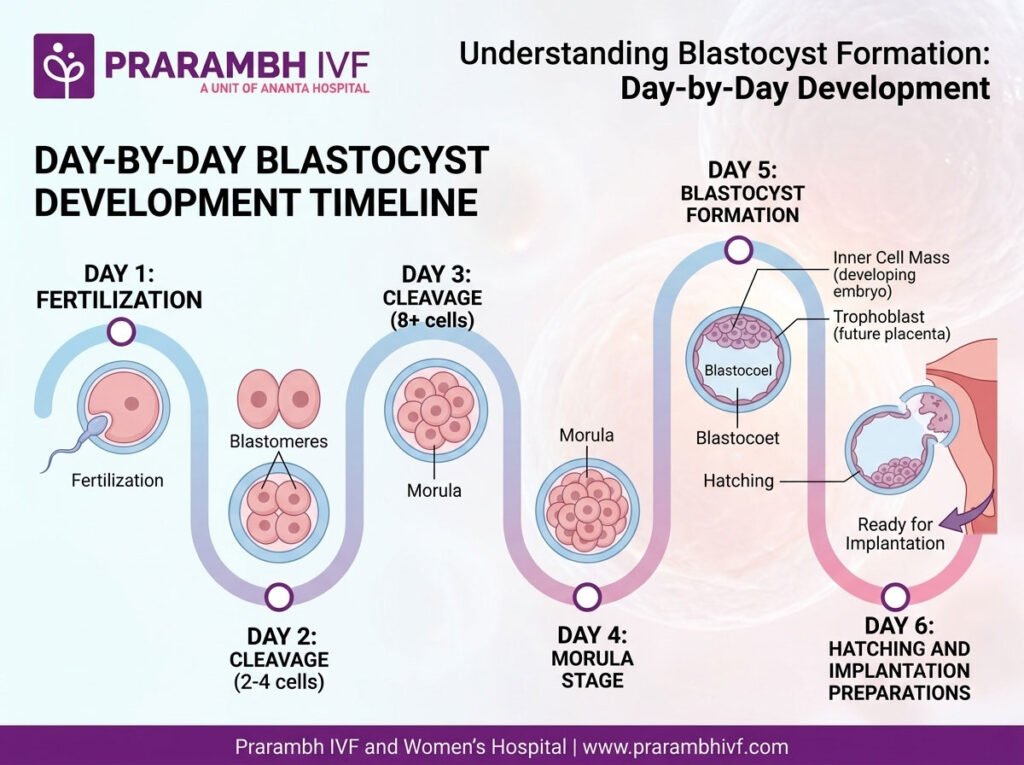
Day 1: Fertilization
On Day 1, fertilization occurs when a sperm successfully penetrates the egg. The genetic material from the sperm and egg combine to form a single-celled zygote. This zygote begins to divide through a process called cleavage, but no growth occurs at this stage. The initial division only takes about 24 to 30 hours after fertilization.
Day 2: Two to Four Cells
By Day 2, the zygote has begun its first cell division. The single cell now divides into two, then four cells within approximately 48 hours. At this stage, the cells are called blastomeres. They continue to divide rapidly, but the overall size of the embryo remains the same, as the cells are tightly packed together. These early divisions are crucial for ensuring a healthy embryo.
Day 3: Eight Cells and Beyond
On Day 3, the embryo typically reaches the eight-cell stage. As the cells continue to divide, they also begin to differentiate. Some cells become specialized for the formation of the placenta, while others will develop into the embryo itself. This day is significant because it marks the beginning of cellular communication, allowing cells to start signaling to each other and promoting further organizational development.
Day 4: Morula Stage
By Day 4, the embryo has transformed into a morula, a solid ball of cells typically containing about 16 to 32 blastomeres. The morula stage represents an essential transition, as the embryo prepares to form a blastocyst. However, it is still encapsulated in the protective outer shell known as the zona pellucida. This layer plays a critical role in the implantation process.
Day 5: Blastocyst Formation
On Day 5, the morula begins to evolve into a blastocyst. The cells start to form a fluid-filled cavity called the blastocoel. This is the point at which the blastocyst develops into a structure with two distinct cell types: the trophoblast and the inner cell mass. The trophoblast will eventually form the placenta, while the inner cell mass is destined to develop into the embryo. This differentiation is crucial for establishing the necessary structures for future development.
Day 6: Implantation Preparations
By Day 6, the blastocyst is ready for implantation, a vital process for achieving pregnancy. At this point, the blastocyst begins to hatch from the zona pellucida, the outer shell that has protected it thus far. Once it hatches, the blastocyst can attach to the lining of the uterus, a process that typically occurs within 24 to 48 hours after hatching. Successful implantation is essential for establishing a viable pregnancy.
The Importance of Blastocyst Development
Understanding each stage of blastocyst development highlights the intricate process that occurs within the first week of fertilization. A well-formed blastocyst is a crucial factor in the success of IVF and fertility treatments. Not all embryos reach the blastocyst stage, and those that do may have varying chances of successful implantation. By monitoring the development to the blastocyst stage, fertility clinics can select the healthiest embryos for transfer, increasing the likelihood of a successful pregnancy.
Conclusion
Blastocyst formation is a remarkable journey that takes place in the early stages of human development. From fertilization to implantation, each day reveals a series of complex processes that need to occur for a successful pregnancy. Understanding these stages can empower prospective parents by providing insight into the IVF journey. If you have questions about your fertility journey or are considering IVF options, consulting with a fertility specialist can help guide you through this incredible process.
