
Infertility is often thought of as a women’s health issue, but medical research shows that male factors contribute to nearly 50% of infertility cases. While some men experience mild fertility problems that can be managed with lifestyle changes or medications, others are diagnosed with severe male infertility, a condition that may require specialized fertility treatments to achieve pregnancy.
A diagnosis of severe male infertility can feel overwhelming, but it does not mean that parenthood is impossible. Thanks to advances in reproductive medicine, many couples with significant male fertility challenges are now able to conceive using personalized fertility treatments.
At Prarambh IVF, we understand that every couple’s fertility journey is unique. Our experienced fertility specialists perform comprehensive evaluations to identify the underlying cause of male infertility and recommend evidence-based treatment options tailored to each patient’s needs.
In this detailed guide, we’ll explain what severe male infertility is, its causes, diagnostic process, and the most effective fertility treatments available today.
What Is Severe Male Infertility?
Severe male infertility refers to a condition in which a man’s ability to fertilize an egg is significantly reduced due to problems with sperm production, sperm function, or sperm delivery.
Unlike mild male infertility, severe cases often involve extremely low sperm numbers, poor sperm movement, abnormal sperm structure, or even the complete absence of sperm in the ejaculate.
Although these conditions may reduce the chances of natural conception, many couples can still achieve pregnancy with appropriate fertility treatment.
Understanding Male Fertility
For natural conception to occur, healthy sperm must:
- Be produced in sufficient numbers.
- Have good forward movement (motility).
- Have a normal shape (morphology).
- Travel successfully through the reproductive tract.
- Fertilize a healthy egg.
A problem with any of these steps can affect fertility.
Common Causes of Severe Male Infertility
Several medical, genetic, hormonal, and lifestyle factors may contribute to severe male infertility.
1. Extremely Low Sperm Count
Some men produce very few sperm, making natural fertilization difficult.
Possible causes include:
- Hormonal disorders
- Genetic conditions
- Previous infections
- Testicular injury
- Certain medications
2. Azoospermia (No Sperm in Semen)
Azoospermia means no sperm are present in the semen.
There are two main types:
Obstructive Azoospermia
Sperm production is normal, but a blockage prevents sperm from reaching the semen.
Possible causes include:
- Previous surgery
- Congenital absence of the vas deferens
- Infection-related scarring
Non-Obstructive Azoospermia
The testicles produce very few or no sperm.
Possible causes include:
- Genetic disorders
- Hormonal imbalance
- Testicular failure
- Previous chemotherapy or radiation
3. Poor Sperm Motility
Even when sperm count is adequate, sperm may not swim efficiently toward the egg.
Reduced motility decreases the likelihood of natural fertilization.
4. Abnormal Sperm Morphology
Morphology refers to the size and shape of sperm.
Significant abnormalities may reduce fertilization potential.
5. Varicocele
A varicocele is an enlargement of veins within the scrotum.
It may:
- Increase testicular temperature
- Reduce sperm production
- Affect sperm quality
Varicocele is one of the most common treatable causes of male infertility.
6. Hormonal Disorders
Hormones regulate sperm production.
Problems involving:
- Testosterone
- FSH
- LH
- Prolactin
- Thyroid hormones
may interfere with fertility.
7. Genetic Conditions
Some inherited conditions affect sperm production.
Examples include:
- Chromosomal abnormalities
- Y chromosome microdeletions
- Certain inherited reproductive disorders
Genetic testing may be recommended in selected cases.
8. Lifestyle Factors
Several lifestyle habits negatively affect sperm quality.
These include:
- Smoking
- Excessive alcohol
- Obesity
- Recreational drugs
- Poor nutrition
- Chronic stress
- Lack of sleep
Improving lifestyle habits may support overall reproductive health.
Symptoms of Severe Male Infertility
Many men experience no obvious symptoms.
Common signs include:
- Difficulty achieving pregnancy
- History of undescended testicles
- Previous reproductive surgery
- Hormonal abnormalities
- Erectile or ejaculation problems (in some cases)
- Small testicular size
- Varicocele
Often, infertility is discovered only after fertility testing.
How Is Severe Male Infertility Diagnosed?
A complete fertility evaluation helps determine the underlying cause.
Medical History
The fertility specialist reviews:
- Previous pregnancies
- Childhood illnesses
- Surgeries
- Medications
- Lifestyle habits
- Family history
Physical Examination
The doctor examines:
- Testicular size
- Presence of varicocele
- Reproductive anatomy
- Hormonal signs
Semen Analysis
Semen analysis evaluates:
- Sperm concentration
- Motility
- Morphology
- Semen volume
At least two semen analyses are usually recommended for accurate assessment.
Hormone Testing
Blood tests may measure:
- Testosterone
- FSH
- LH
- Prolactin
- Thyroid hormones
These results help identify hormonal causes.
Scrotal Ultrasound
Ultrasound can detect:
- Varicocele
- Testicular abnormalities
- Structural problems
Genetic Testing
Genetic evaluation may be advised for men with:
- Very low sperm counts
- Azoospermia
- Family history of genetic disorders
Sperm DNA Fragmentation Testing
In selected cases, specialized testing may evaluate DNA damage within sperm.
This can provide additional information when couples experience:
- Recurrent miscarriage
- Repeated IVF failure
- Unexplained infertility
Best Fertility Treatments for Severe Male Infertility
Treatment depends on the underlying diagnosis rather than using a one-size-fits-all approach.
1. Lifestyle Modification
For some men, improving overall health may enhance sperm quality.
Recommended changes include:
- Stopping smoking
- Reducing alcohol intake
- Achieving a healthy weight
- Exercising regularly
- Eating a balanced diet
- Improving sleep quality
- Managing stress
Because sperm production takes approximately 70–90 days, improvements may take several months.
2. Medical Treatment
Hormonal medications may be appropriate when infertility is caused by hormone deficiencies or endocrine disorders.
Examples include treatment for:
- Low testosterone caused by pituitary disorders
- Elevated prolactin
- Thyroid disease
Treatment should always be supervised by a fertility specialist or endocrinologist.
3. Treatment of Varicocele
If a clinically significant varicocele is identified, surgical repair may improve sperm quality in selected patients.
Not every man with varicocele requires surgery.
The decision depends on:
- Semen analysis
- Symptoms
- Fertility goals
- Clinical examination
4. Surgical Sperm Retrieval
Some men produce sperm within the testicles even when none appear in the semen.
Specialized surgical procedures may retrieve sperm directly from the reproductive tract.
Common techniques include:
PESA (Percutaneous Epididymal Sperm Aspiration)
A minimally invasive procedure used primarily in obstructive azoospermia.
TESA (Testicular Sperm Aspiration)
Sperm are collected directly from the testicle using a needle.
TESE (Testicular Sperm Extraction)
A small sample of testicular tissue is obtained to search for sperm.
Micro-TESE
Microsurgical Testicular Sperm Extraction uses an operating microscope to identify areas of active sperm production.
Micro-TESE is commonly considered for selected men with non-obstructive azoospermia.
5. Intrauterine Insemination (IUI)
IUI involves placing specially prepared sperm directly into the uterus around the time of ovulation.
It may be considered when:
- Mild to moderate male infertility exists
- Adequate motile sperm are available
- Female fertility evaluation is favorable
However, IUI is generally less effective for severe male infertility involving extremely low sperm counts.
6. In Vitro Fertilization (IVF)
IVF involves:
- Stimulating the ovaries
- Retrieving mature eggs
- Fertilizing eggs in the laboratory
- Transferring embryos into the uterus
IVF improves pregnancy chances for many couples facing infertility.
7. Intracytoplasmic Sperm Injection (ICSI)
ICSI represents one of the most significant advances in male infertility treatment.
During ICSI:
- A single healthy sperm is selected.
- The sperm is injected directly into the mature egg.
ICSI is commonly recommended for:
- Severe low sperm count
- Poor motility
- Abnormal morphology
- Surgically retrieved sperm
- Previous fertilization failure
Many couples with severe male infertility achieve successful pregnancies using IVF combined with ICSI.
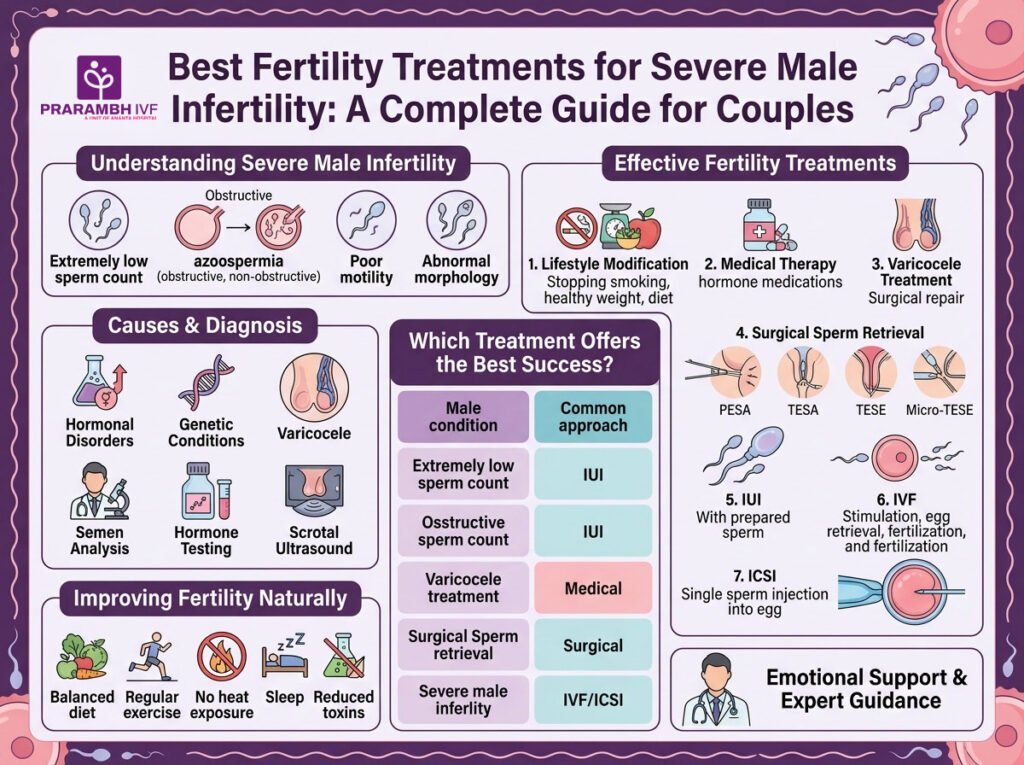
Which Treatment Offers the Best Success?
The answer depends on the underlying diagnosis.
For example:
| Condition | Common Treatment Approach |
|---|---|
| Mild sperm abnormalities | Lifestyle changes or IUI |
| Hormonal disorders | Medical therapy |
| Varicocele | Surgical repair when indicated |
| Obstructive azoospermia | Surgical sperm retrieval + IVF/ICSI |
| Non-obstructive azoospermia | Micro-TESE + IVF/ICSI in selected cases |
| Severe sperm abnormalities | IVF with ICSI |
Personalized evaluation is essential before selecting treatment.
Can Severe Male Infertility Be Cured?
Some causes can be treated successfully.
Examples include:
- Hormonal disorders
- Certain infections
- Varicocele
- Lifestyle-related sperm damage
Other conditions, such as genetic disorders or irreversible testicular failure, may not be curable but can often be managed using advanced fertility treatments.
Improving Fertility Naturally
Healthy habits support sperm production even when medical treatment is required.
Eat a Fertility-Friendly Diet
Focus on:
- Fruits
- Vegetables
- Whole grains
- Fish
- Nuts
- Seeds
- Healthy fats
Exercise Regularly
Moderate exercise supports hormone balance and cardiovascular health.
Avoid excessive overtraining.
Avoid Heat Exposure
Prolonged exposure to high temperatures may affect sperm production.
Examples include:
- Frequent hot tubs
- Saunas
- Tight clothing for extended periods
Maintain Healthy Sleep
Quality sleep supports hormone production involved in sperm development.
Aim for consistent sleep each night.
Reduce Environmental Toxin Exposure
Whenever possible, minimize exposure to:
- Industrial chemicals
- Pesticides
- Heavy metals
- Air pollution
Emotional Impact of Male Infertility
A diagnosis of severe male infertility can affect emotional well-being.
Men may experience:
- Anxiety
- Stress
- Sadness
- Reduced self-confidence
- Relationship concerns
Open communication between partners and professional counseling can help couples navigate the emotional aspects of fertility treatment.
Common Myths About Severe Male Infertility
Myth 1: Severe Male Infertility Means Fatherhood Is Impossible
Fact: Many men with severe infertility become biological fathers through modern fertility treatments.
Myth 2: Male Infertility Is Always Caused by Low Testosterone
Fact: Many infertile men have normal testosterone levels.
Myth 3: Healthy Appearance Means Healthy Fertility
Fact: Many men with severe infertility have no physical symptoms.
Myth 4: IVF Is the Only Option
Fact: Treatment depends on the diagnosis. Lifestyle changes, medications, surgery, sperm retrieval, IUI, IVF, or ICSI may all be appropriate in different situations.
When Should You Consult a Fertility Specialist?
Couples should consider evaluation if:
- Pregnancy has not occurred after one year of regular unprotected intercourse.
- The female partner is 35 years or older and pregnancy has not occurred after six months.
- Previous semen analysis was abnormal.
- The male partner has a history of undescended testes, chemotherapy, reproductive surgery, or testicular injury.
- Recurrent pregnancy loss has occurred.
- Previous fertility treatments have been unsuccessful.
Early diagnosis often leads to more treatment options and better outcomes.
Why Choose Prarambh IVF?
At Prarambh IVF, we recognize that successful fertility treatment begins with an accurate diagnosis. Our multidisciplinary team provides comprehensive male fertility evaluation and personalized treatment plans designed around each couple’s unique circumstances.
Our approach includes:
- Comprehensive male fertility assessment
- Advanced laboratory diagnostics
- Evidence-based fertility treatments
- Personalized IVF and ICSI protocols
- Compassionate counseling and patient support
- Transparent communication throughout the treatment journey
Every treatment recommendation is based on current clinical evidence, individual fertility factors, and the couple’s reproductive goals.
Frequently Asked Questions
Can men with no sperm in semen still become biological fathers?
In some cases, yes. If sperm are being produced within the testicles, surgical sperm retrieval techniques combined with IVF and ICSI may provide an opportunity for biological parenthood. Suitability depends on the underlying diagnosis.
Is ICSI always necessary for severe male infertility?
Not always. The need for ICSI depends on sperm quality, fertilization history, and the couple’s overall fertility evaluation. Your fertility specialist will recommend the most appropriate approach.
How long does it take to improve sperm quality?
Since sperm development takes approximately 70 to 90 days, improvements from lifestyle changes or medical treatment generally take several months to become apparent.
Can lifestyle changes alone treat severe male infertility?
Lifestyle improvements support overall reproductive health and may enhance sperm quality, but severe male infertility often requires medical or assisted reproductive treatments depending on the cause.
Conclusion
Severe male infertility can be challenging, but it is no longer an obstacle without hope. Modern reproductive medicine offers a wide range of effective treatment options—from lifestyle modification and medical therapy to surgical sperm retrieval, IVF, and ICSI—allowing many couples to achieve successful pregnancies.
The key to choosing the right treatment lies in a thorough fertility evaluation that identifies the specific cause of infertility. Every couple’s journey is different, and personalized care is essential for achieving the best possible outcomes.
At Prarambh IVF, we are committed to providing compassionate, evidence-based fertility care for couples facing male infertility. Through advanced diagnostics, individualized treatment plans, and experienced fertility specialists, we help couples move forward with confidence on their journey toward parenthood.
If you are concerned about male fertility or have been trying to conceive without success, seeking early evaluation can open the door to timely treatment and improved reproductive outcomes.
Visit us: www.prarambhivf.com
