
Introduction
For couples trying to conceive naturally or through fertility treatments such as IVF, IUI, or ovulation induction, the Two-Week Wait (2WW) can feel like the longest and most emotionally challenging phase of the fertility journey. The two-week wait refers to the period between ovulation, embryo transfer, or insemination and the day you can reliably take a pregnancy test.
During these 14 days, it is common to experience a mix of excitement, hope, anxiety, and uncertainty. Many women closely monitor every physical sensation, wondering whether it is an early pregnancy symptom or simply a normal hormonal change.
At Prarambh IVF, we understand how stressful the 2WW can be. This comprehensive survival guide explains what happens during the two-week wait, common symptoms, what you should do, what you should avoid, and how to navigate this crucial period with confidence and peace of mind.
What Is the Two-Week Wait (2WW)?
The Two-Week Wait (2WW) is the period between:
- Ovulation and pregnancy testing in natural conception cycles
- Intrauterine Insemination (IUI) and pregnancy testing
- IVF embryo transfer and pregnancy testing
During this time, if fertilization has occurred, the fertilized egg travels to the uterus and implants into the uterine lining. After implantation, the body begins producing human chorionic gonadotropin (hCG), the hormone detected by pregnancy tests.
Because implantation and hormone production take time, testing too early may result in inaccurate or false-negative results.
Why Is the 2WW So Challenging?
The two-week wait is emotionally difficult because there is often little control over the outcome. Patients may find themselves:
- Analyzing every symptom
- Constantly searching for pregnancy signs online
- Repeatedly taking home pregnancy tests
- Experiencing mood swings and anxiety
- Feeling hopeful one day and discouraged the next
Understanding what is normal during this period can help reduce unnecessary stress and prevent misconceptions.
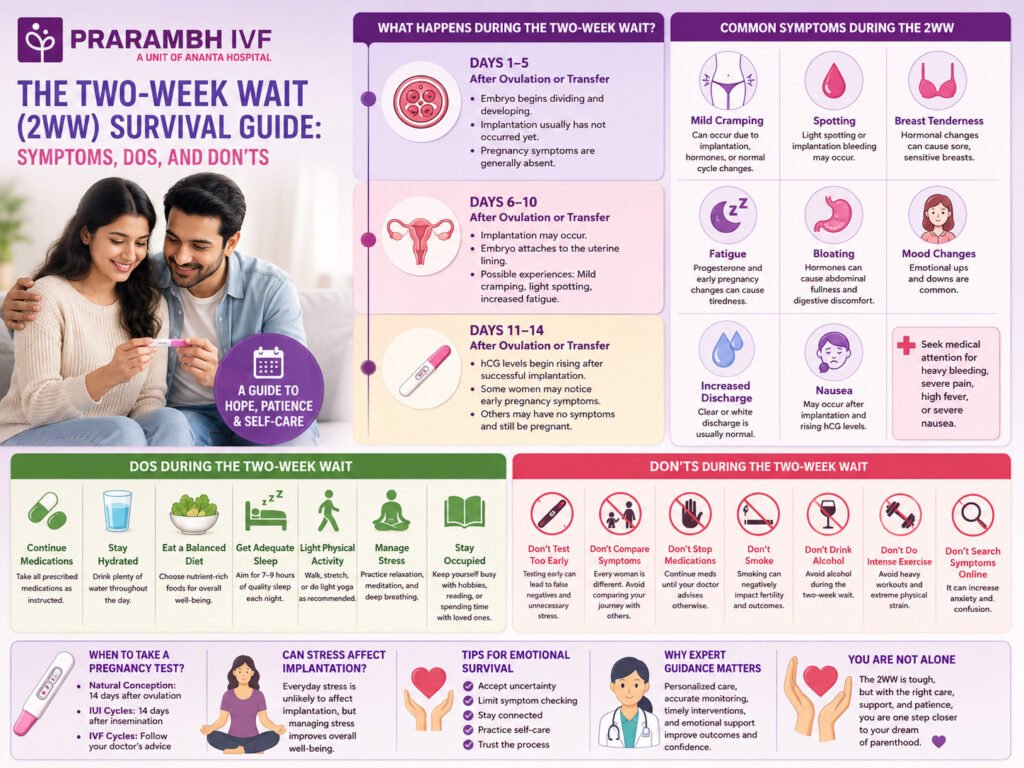
What Happens During the Two-Week Wait?
Days 1–5 After Ovulation or Transfer
If fertilization occurs, the embryo begins dividing and developing.
During IVF, transferred embryos continue their development within the uterus.
At this stage:
- Implantation usually has not occurred yet
- Pregnancy symptoms are generally absent
- Hormonal medications may cause physical sensations
Days 6–10 After Ovulation or Transfer
This is often when implantation may occur.
The embryo attaches to the uterine lining and starts communicating with the mother’s body.
Possible experiences include:
- Mild cramping
- Light spotting
- Increased fatigue
However, many women experience no symptoms at all.
Days 11–14 After Ovulation or Transfer
Following successful implantation, hCG levels begin rising.
Some women may notice:
- Breast tenderness
- Nausea
- Fatigue
- Increased urination
- Mood changes
Others may still have no noticeable symptoms and still achieve a healthy pregnancy.
Common Symptoms During the Two-Week Wait
It is important to remember that symptoms alone cannot confirm pregnancy.
1. Mild Cramping
Light cramping can occur because of:
- Implantation
- Hormonal changes
- Progesterone supplementation
- Normal menstrual cycle changes
Mild cramps are usually not a cause for concern.
2. Spotting or Implantation Bleeding
Some women experience light spotting when implantation occurs.
Characteristics may include:
- Pink or brown discharge
- Very light flow
- Lasting one or two days
Not every pregnancy involves implantation bleeding.
3. Breast Tenderness
Rising progesterone levels can cause:
- Sore breasts
- Increased sensitivity
- Heaviness
This symptom may occur whether pregnancy has occurred or not.
4. Fatigue
Feeling unusually tired is common during the 2WW.
Possible causes include:
- Progesterone medications
- Hormonal fluctuations
- Early pregnancy changes
- Emotional stress
5. Bloating
Many women report:
- Abdominal fullness
- Mild swelling
- Digestive discomfort
Progesterone is often responsible for these symptoms.
6. Mood Changes
The emotional ups and downs of the fertility journey can lead to:
- Irritability
- Anxiety
- Emotional sensitivity
- Difficulty concentrating
These feelings are normal and common.
7. Increased Vaginal Discharge
Hormonal changes can cause:
- Clear discharge
- White discharge
- Increased moisture
This is usually normal unless accompanied by itching, odor, or irritation.
8. Nausea
Although often considered an early pregnancy symptom, nausea typically appears after implantation and rising hCG levels.
Experiencing nausea during the 2WW does not necessarily indicate pregnancy.
Symptoms That Require Medical Attention
While most symptoms during the two-week wait are harmless, contact your fertility specialist immediately if you experience:
- Heavy bleeding
- Severe abdominal pain
- Shortness of breath
- Dizziness or fainting
- High fever
- Significant swelling
- Severe nausea and vomiting
These symptoms may require prompt medical evaluation.
Dos During the Two-Week Wait
Following healthy habits can support overall well-being during this period.
1. Continue Prescribed Medications
If your fertility specialist has prescribed:
- Progesterone supplements
- Hormonal medications
- Prenatal vitamins
Take them exactly as instructed.
Never stop medications without consulting your doctor.
2. Stay Hydrated
Proper hydration supports:
- Circulation
- Digestion
- Overall health
Aim for adequate fluid intake throughout the day.
Water remains the best choice.
3. Eat a Balanced Diet
Focus on nutrient-rich foods such as:
Fruits
- Apples
- Oranges
- Berries
- Bananas
Vegetables
- Spinach
- Broccoli
- Carrots
- Bell peppers
Protein Sources
- Eggs
- Fish
- Poultry
- Lentils
- Beans
Whole Grains
- Brown rice
- Oats
- Whole wheat products
Balanced nutrition supports reproductive health and overall wellness.
4. Get Adequate Sleep
Good-quality sleep helps:
- Hormonal regulation
- Emotional balance
- Physical recovery
Aim for 7–9 hours of sleep each night whenever possible.
5. Engage in Light Physical Activity
Gentle exercise can improve:
- Blood circulation
- Mood
- Stress management
Suitable options include:
- Walking
- Stretching
- Light yoga
- Relaxation exercises
Always follow your fertility specialist’s recommendations.
6. Manage Stress
While stress alone does not cause infertility, managing anxiety can improve your overall experience.
Helpful strategies include:
- Meditation
- Deep breathing
- Reading
- Listening to music
- Spending time with loved ones
- Professional counseling
7. Stay Occupied
Constantly focusing on symptoms can increase emotional stress.
Consider:
- Watching movies
- Working on hobbies
- Meeting friends
- Learning a new skill
- Planning future activities
Keeping busy can make the waiting period feel shorter.
Don’ts During the Two-Week Wait
Knowing what to avoid is equally important.
1. Don’t Take Pregnancy Tests Too Early
Early testing is one of the most common mistakes during the 2WW.
Testing too soon can result in:
- False-negative results
- Emotional disappointment
- Unnecessary stress
Follow your fertility specialist’s recommended testing date.
2. Don’t Compare Your Symptoms With Others
Every woman experiences pregnancy differently.
Some women:
- Experience many symptoms
- Experience very few symptoms
- Experience no symptoms at all
Comparing experiences can create unnecessary anxiety.
3. Don’t Stop Medications Without Medical Advice
Even if you think your cycle was unsuccessful, continue prescribed medications until instructed otherwise.
Stopping treatment prematurely may affect outcomes.
4. Don’t Smoke
Smoking negatively impacts:
- Fertility
- Implantation
- Pregnancy outcomes
Avoid tobacco products completely.
5. Don’t Consume Alcohol
Most fertility specialists recommend avoiding alcohol during the two-week wait.
This precaution supports a healthy environment for potential pregnancy.
6. Don’t Engage in Extreme Exercise
High-intensity workouts may not be appropriate during this phase.
Avoid:
- Heavy weightlifting
- Extreme endurance training
- Intense physical strain
Choose moderate activities instead.
7. Don’t Spend Hours Searching Symptoms Online
Internet searches often increase confusion because many symptoms overlap between:
- Early pregnancy
- PMS
- Medication side effects
Rely on guidance from qualified fertility professionals.
Can Stress Affect Implantation?
Many patients worry that feeling stressed during the 2WW will ruin their chances of success.
Current research does not show that everyday stress alone prevents implantation or causes treatment failure.
However, excessive stress can affect:
- Sleep quality
- Appetite
- Emotional well-being
Managing stress is beneficial for overall health and comfort during treatment.
When Should You Take a Pregnancy Test?
The best timing depends on your treatment plan.
Generally:
Natural Conception
Approximately 14 days after ovulation.
IUI Cycles
Usually 14 days after insemination.
IVF Cycles
Typically according to your fertility specialist’s instructions, often around 9–14 days after embryo transfer depending on embryo stage and clinic protocol.
Blood tests performed by fertility clinics provide the most accurate results.
What If the Pregnancy Test Is Positive?
A positive test is an exciting milestone.
Your fertility team may recommend:
- Repeat blood testing
- Monitoring hCG levels
- Early ultrasound examination
- Continued medications
Regular follow-up ensures healthy pregnancy progression.
What If the Pregnancy Test Is Negative?
A negative result can be emotionally difficult.
Remember:
- One unsuccessful cycle does not define your fertility journey.
- Many successful pregnancies occur after multiple treatment cycles.
- Your fertility specialist can review your treatment plan and discuss next steps.
Seeking support from your healthcare team, partner, family, or counselor can be extremely helpful.
Tips for Emotional Survival During the 2WW
Accept Uncertainty
The outcome cannot be known immediately, and that uncertainty is part of the process.
Limit Symptom Checking
Constant body monitoring often increases anxiety.
Stay Connected
Talk openly with your partner or trusted support system.
Practice Self-Care
Prioritize activities that help you feel calm and positive.
Trust the Process
Following your fertility specialist’s recommendations provides the best chance for success.
Why Expert Guidance Matters
Every fertility journey is unique. Factors such as age, medical history, hormone levels, egg quality, sperm quality, and treatment protocols influence outcomes.
Professional guidance ensures:
- Personalized treatment plans
- Accurate monitoring
- Timely interventions
- Emotional support throughout the journey
Working closely with an experienced fertility team can help improve confidence and understanding during every stage of treatment.
Conclusion
The Two-Week Wait (2WW) is often one of the most emotionally intense phases of trying to conceive. While it may feel tempting to analyze every symptom, it is important to remember that symptoms alone cannot predict pregnancy. Many signs experienced during the 2WW are caused by normal hormonal changes or fertility medications.
The best approach is to focus on healthy habits, follow your doctor’s instructions, continue prescribed medications, avoid unnecessary stress, and wait for the recommended pregnancy test date.
At Prarambh IVF, we are committed to supporting patients throughout every stage of their fertility journey. From diagnosis and treatment to emotional guidance and pregnancy care, our experienced team strives to provide compassionate, evidence-based fertility care to help individuals and couples achieve their dream of parenthood.
For expert fertility consultation and personalized treatment guidance, visit www.prarambhivf.com and connect with the specialists at Prarambh IVF today.
