
When couples experience difficulty conceiving, attention is often focused on the female partner. However, male infertility contributes to nearly half of all infertility cases, making a comprehensive evaluation of both partners essential. While a standard semen analysis provides valuable information about sperm count, motility, and morphology, it does not reveal everything about sperm health. One important factor that has gained significant attention in reproductive medicine is Sperm DNA Fragmentation (SDF).
Sperm DNA fragmentation refers to damage in the genetic material carried by sperm. Even when semen analysis results appear normal, high levels of DNA fragmentation can reduce the chances of natural conception, affect the success of fertility treatments, and increase the risk of miscarriage in some couples.
At Prarambh IVF, we believe that identifying the underlying causes of infertility is the first step toward successful treatment. Advanced diagnostic tools, including sperm DNA fragmentation testing when clinically appropriate, can help fertility specialists create personalized treatment plans that improve reproductive outcomes.
This comprehensive guide explains what sperm DNA fragmentation is, its causes, symptoms, diagnosis, treatment options, and lifestyle changes that may improve sperm health.
What Is Sperm DNA Fragmentation?
Every sperm cell carries genetic material (DNA) that combines with the egg’s DNA to create an embryo. For healthy embryo development, the DNA inside the sperm must remain intact.
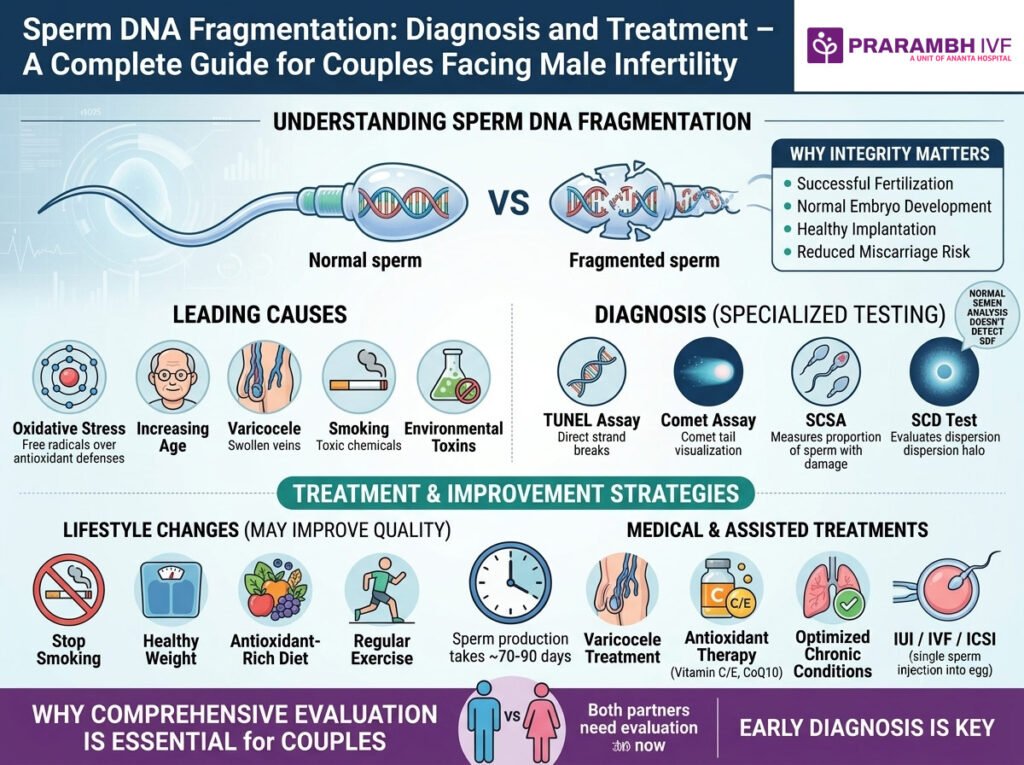
Sperm DNA fragmentation occurs when breaks or damage develop within the DNA strands of sperm cells. This damage may interfere with fertilization, embryo development, implantation, and pregnancy.
Unlike sperm count or motility, DNA integrity cannot be evaluated through a routine semen analysis. Specialized laboratory tests are required to measure the level of DNA fragmentation.
Why Is Sperm DNA Integrity Important?
The sperm’s primary role is to deliver healthy genetic material to the egg.
Healthy sperm DNA supports:
- Successful fertilization
- Normal embryo development
- Healthy implantation
- Continued fetal growth
- Reduced risk of pregnancy loss
When sperm DNA is significantly damaged, fertilization may still occur, but embryo development may be affected in some cases. This is why DNA integrity has become an important consideration in fertility evaluation, particularly for couples with unexplained infertility or repeated treatment failures.
What Causes Sperm DNA Fragmentation?
Many factors can contribute to DNA damage in sperm. Some are related to lifestyle, while others are linked to medical conditions or environmental exposures.
1. Oxidative Stress
Oxidative stress is considered one of the leading causes of sperm DNA fragmentation.
It occurs when harmful molecules known as free radicals exceed the body’s natural antioxidant defenses.
Sources of oxidative stress include:
- Smoking
- Pollution
- Chronic illness
- Poor diet
- Obesity
- Infections
2. Increasing Age
Although men remain fertile longer than women, advancing age may increase DNA damage in sperm.
Research suggests that sperm DNA quality gradually declines with age, especially after the age of 40.
3. Varicocele
A varicocele is an enlargement of veins within the scrotum.
It may:
- Increase testicular temperature
- Reduce oxygen supply
- Increase oxidative stress
- Damage sperm DNA
Varicocele is one of the most common treatable causes of male infertility.
4. Smoking
Cigarette smoke contains numerous toxic chemicals that increase oxidative stress and DNA damage.
Smoking has also been associated with:
- Reduced sperm count
- Poor motility
- Abnormal morphology
Stopping smoking can improve overall reproductive health over time.
5. Alcohol and Recreational Drug Use
Excessive alcohol consumption and recreational drug use may negatively affect sperm production and DNA integrity.
Limiting or avoiding these substances supports healthier sperm development.
6. Environmental Toxins
Long-term exposure to certain chemicals may affect male fertility.
Examples include:
- Industrial chemicals
- Heavy metals
- Pesticides
- Radiation
- Air pollution
Reducing unnecessary exposure whenever possible may benefit reproductive health.
7. Fever and Illness
High fever can temporarily affect sperm production.
Because sperm development takes approximately 2–3 months, illness may influence sperm quality for several weeks after recovery.
8. Obesity
Obesity is associated with hormonal changes and increased inflammation, both of which may contribute to sperm DNA damage.
Maintaining a healthy weight supports reproductive health.
9. Chronic Medical Conditions
Certain medical conditions may increase DNA fragmentation, including:
- Diabetes
- Chronic infections
- Autoimmune disorders
- Hormonal imbalances
Managing these conditions appropriately is important for fertility.
Symptoms of Sperm DNA Fragmentation
One of the challenges of sperm DNA fragmentation is that it usually causes no noticeable symptoms.
Most men:
- Feel healthy
- Have normal sexual function
- Experience normal ejaculation
Many only discover the problem during fertility evaluation after experiencing difficulty conceiving.
When Should Sperm DNA Fragmentation Be Tested?
Not every couple requires sperm DNA fragmentation testing.
Your fertility specialist may recommend testing in situations such as:
- Unexplained infertility
- Recurrent pregnancy loss
- Repeated IVF or ICSI failure
- Poor embryo development
- Borderline semen analysis results
- Advanced paternal age
- Presence of varicocele
- Persistent infertility despite normal semen parameters
Testing is performed based on the individual’s medical history and clinical findings rather than as a routine screening test for every patient.
How Is Sperm DNA Fragmentation Diagnosed?
Diagnosis requires specialized laboratory testing.
Several validated methods are available.
Sperm Chromatin Structure Assay (SCSA)
This test measures the proportion of sperm with damaged DNA using flow cytometry.
It provides an estimate known as the DNA Fragmentation Index (DFI).
TUNEL Assay
The TUNEL test directly detects DNA strand breaks within sperm cells.
It is widely used in fertility laboratories and provides detailed information about DNA integrity.
Comet Assay
The Comet Assay evaluates DNA damage at the individual sperm level.
Damaged DNA appears similar to a comet tail under microscopic examination.
Sperm Chromatin Dispersion (SCD) Test
Also called the Halo Test, this method assesses DNA fragmentation by evaluating the dispersion pattern of sperm chromatin.
Understanding DNA Fragmentation Index (DFI)
The DNA Fragmentation Index (DFI) estimates the percentage of sperm with damaged DNA.
While interpretation varies depending on the laboratory and testing method, results are generally classified as:
- Low DNA fragmentation
- Moderate DNA fragmentation
- High DNA fragmentation
A fertility specialist interprets the results alongside semen analysis, medical history, and other fertility investigations. A single DFI value does not determine fertility potential on its own.
Does High DNA Fragmentation Mean Infertility?
No.
High DNA fragmentation does not automatically mean a man is infertile.
Many men with elevated DNA fragmentation are able to father children naturally.
However, increased DNA damage may:
- Reduce the likelihood of conception
- Affect embryo quality
- Increase the time required to achieve pregnancy
- Contribute to unsuccessful fertility treatment in some couples
Because every case is different, treatment recommendations are personalized.
Can Sperm DNA Fragmentation Be Treated?
In many cases, yes.
Treatment focuses on identifying and addressing the underlying cause whenever possible.
Lifestyle Changes That May Improve Sperm DNA Quality
Healthy lifestyle habits support overall reproductive health and may reduce oxidative stress.
Quit Smoking
Smoking is strongly associated with increased sperm DNA damage.
Stopping smoking may improve sperm quality over time.
Maintain a Healthy Weight
Weight management helps improve:
- Hormone balance
- Testosterone levels
- Sperm production
Regular exercise combined with a balanced diet is beneficial.
Eat an Antioxidant-Rich Diet
Foods containing natural antioxidants help protect cells from oxidative damage.
Include:
- Berries
- Citrus fruits
- Leafy green vegetables
- Nuts
- Seeds
- Whole grains
- Fish rich in omega-3 fatty acids
A varied, nutrient-rich diet supports reproductive health.
Exercise Regularly
Moderate physical activity improves overall health and may reduce oxidative stress.
However, excessive intense exercise without adequate recovery may have the opposite effect.
Get Enough Sleep
Sleep supports hormone production and overall reproductive function.
Aim for consistent, good-quality sleep each night.
Reduce Stress
Chronic stress may influence hormone regulation and overall well-being.
Helpful stress-management techniques include:
- Meditation
- Yoga
- Deep breathing
- Mindfulness
- Counseling
Medical Treatments for Sperm DNA Fragmentation
Treatment depends on the underlying cause and the couple’s fertility history.
Treating Varicocele
If a clinically significant varicocele is present, treatment may improve sperm quality in selected patients.
Your urologist or fertility specialist will determine whether treatment is appropriate.
Managing Infections
If reproductive tract infections are identified, appropriate medical treatment may help reduce inflammation and improve sperm health.
Optimizing Chronic Health Conditions
Proper management of diabetes, hormonal disorders, or other medical conditions may positively influence reproductive health.
Role of Antioxidants
Some studies suggest that antioxidants may reduce oxidative stress and improve sperm DNA integrity in selected men.
Common antioxidants studied include:
- Vitamin C
- Vitamin E
- Zinc
- Selenium
- Coenzyme Q10
- L-Carnitine
However, supplements should only be taken after consulting a qualified healthcare professional, as they may not be suitable or necessary for everyone.
Assisted Reproductive Treatments
If pregnancy does not occur naturally despite treatment, assisted reproductive technologies may be considered.
Intrauterine Insemination (IUI)
IUI may be appropriate for selected couples depending on the overall fertility evaluation.
Success depends on multiple factors beyond DNA fragmentation alone.
In Vitro Fertilization (IVF)
IVF may be recommended when other fertility factors are also present or when previous treatments have been unsuccessful.
Intracytoplasmic Sperm Injection (ICSI)
ICSI involves injecting a single sperm directly into an egg.
In certain clinical situations, ICSI may be considered for couples with male factor infertility, although the decision depends on the complete fertility assessment.
Does Sperm DNA Fragmentation Affect IVF Success?
Research suggests that elevated sperm DNA fragmentation may influence certain reproductive outcomes, including embryo development or pregnancy rates in some couples.
However, evidence is still evolving, and outcomes depend on many additional factors, such as:
- Female age
- Egg quality
- Embryo quality
- Uterine health
- Laboratory techniques
A fertility specialist can explain how DNA fragmentation results apply to your individual situation.
How Long Does It Take to Improve Sperm Quality?
Sperm production takes approximately 70 to 90 days.
Therefore, improvements resulting from lifestyle changes or medical treatment may not become evident for several months.
Patience and consistent healthy habits are important during this period.
Can Sperm DNA Fragmentation Be Prevented?
Not all causes can be prevented, but healthy habits may reduce the risk.
Helpful measures include:
- Avoid smoking
- Limit alcohol intake
- Maintain a healthy weight
- Exercise regularly
- Eat a nutritious diet
- Manage chronic illnesses
- Avoid unnecessary exposure to toxins
- Seek treatment for varicocele or infections when indicated
- Schedule fertility evaluation if conception is delayed
Common Myths About Sperm DNA Fragmentation
Myth 1: A Normal Semen Analysis Means Fertility Is Perfect
Fact: A routine semen analysis evaluates sperm count, movement, and shape, but it does not assess DNA integrity.
Myth 2: High DNA Fragmentation Means Pregnancy Is Impossible
Fact: Many men with elevated DNA fragmentation achieve natural pregnancy or successful fertility treatment.
Myth 3: Only Older Men Have DNA Damage
Fact: DNA fragmentation can occur at any age due to lifestyle factors, oxidative stress, illness, or medical conditions.
Myth 4: Supplements Alone Can Cure DNA Fragmentation
Fact: Supplements may be helpful in selected cases, but treatment should focus on identifying and addressing the underlying cause under medical supervision.
When Should You Consult a Fertility Specialist?
Consider seeking evaluation if:
- You have been trying to conceive for one year without success (or six months if the female partner is 35 or older).
- You have experienced recurrent miscarriages.
- Previous IVF or ICSI cycles have been unsuccessful.
- You have a history of varicocele, testicular surgery, or reproductive infections.
- Semen analysis results are abnormal or borderline.
- You wish to undergo a comprehensive male fertility evaluation.
Early diagnosis can help identify potential issues and guide appropriate treatment.
Why Choose Prarambh IVF for Comprehensive Fertility Care?
At Prarambh IVF, we understand that fertility is a shared journey. Our approach includes evaluating both male and female partners to identify the underlying causes of infertility and develop personalized treatment plans.
Our team emphasizes:
- Evidence-based fertility assessment
- Individualized treatment recommendations
- Advanced diagnostic evaluation
- Compassionate patient care
- Clear communication throughout the fertility journey
Every couple’s situation is unique, and our goal is to provide informed guidance based on current reproductive medicine practices.
Frequently Asked Questions
Can sperm DNA fragmentation be reversed?
In some cases, DNA fragmentation may improve after treating underlying causes such as smoking, varicocele, infections, or unhealthy lifestyle factors. The response varies from person to person.
Is sperm DNA fragmentation testing part of every fertility evaluation?
No. It is typically recommended only in selected clinical situations where the results are expected to influence treatment decisions.
Can healthy lifestyle changes improve sperm quality?
Yes. Maintaining a healthy weight, exercising regularly, eating a balanced diet, avoiding smoking, limiting alcohol, and managing chronic health conditions may support better sperm health.
How often should the test be repeated?
The need for repeat testing depends on your treatment plan and whether interventions have been made to improve sperm quality. Your fertility specialist will advise if repeat testing is appropriate.
Conclusion
Sperm DNA fragmentation is an important aspect of male fertility that goes beyond the findings of a standard semen analysis. While elevated DNA fragmentation may affect conception and fertility treatment outcomes in some couples, it does not necessarily prevent pregnancy. Identifying the underlying cause and addressing modifiable risk factors can often improve reproductive health.
A comprehensive fertility evaluation—including both male and female partners—allows fertility specialists to recommend personalized treatment strategies based on the couple’s unique circumstances. Lifestyle improvements, treatment of medical conditions, and advanced fertility techniques may all play a role when clinically indicated.
At Prarambh IVF, we are dedicated to providing evidence-based fertility care with compassion and transparency. Whether you are planning your first fertility evaluation or seeking answers after previous treatment challenges, our experienced team is here to support you with personalized guidance and advanced reproductive care.
Visit us: www.prarambhivf.com
