
Walk into any pharmacy or scroll through any online store, and you will find dozens of “fertility boosters” for men. The bottles promise higher sperm counts, faster swimmers and guaranteed pregnancy. For couples who have been trying for months or years, the appeal is obvious. Supplements feel simple, private and low-risk.
But do male fertility supplements actually work? The honest answer is more nuanced than any label suggests. Some ingredients show real promise. Others have little proof behind them. A few can even do harm. At Prarambh IVF & Fertility Center, we see many men who have spent months on supplements before finally getting tested. This guide explains what the science says, so you can spend your time and money wisely.
Why Male Fertility Matters More Than Most Couples Realise
Male factors contribute to roughly 40–50% of infertility cases, either alone or together with a female factor. Yet many couples begin by investigating only the woman. If you want to understand how common hidden problems are, read our guide on the top 7 hidden causes of infertility most couples ignore.
Sperm quality depends on three basic things: how many sperm are produced (count), how well they move (motility), and how normal they look (morphology). A fourth factor, the integrity of the DNA inside the sperm, is just as important and often overlooked. You can learn more in our article on sperm DNA fragmentation, the missing link in male infertility.
The Basic Idea Behind Fertility Supplements
Most supplements target a process called oxidative stress. Sperm cells are especially vulnerable to damage from reactive oxygen species (free radicals) because their membranes are rich in fatty acids and they have little cytoplasm to defend themselves. High oxidative stress is linked to poor motility, abnormal shape and DNA damage.
The logic is straightforward: if you supply antioxidants, you may protect sperm from that damage. In practice, results are mixed. Many studies are small, use different doses, and measure different outcomes. Improvement on a lab report does not always mean a baby.
What Does the Research Actually Show?
Antioxidants as a group
A large Cochrane review of trials on antioxidants for male subfertility found some signs that couples where the man took antioxidants had higher pregnancy and live-birth rates. However, the reviewers rated the evidence as low certainty, largely because of small trials and inconsistent methods. In plain words: antioxidants may help some men, but the case is not proven.
Coenzyme Q10 (CoQ10)
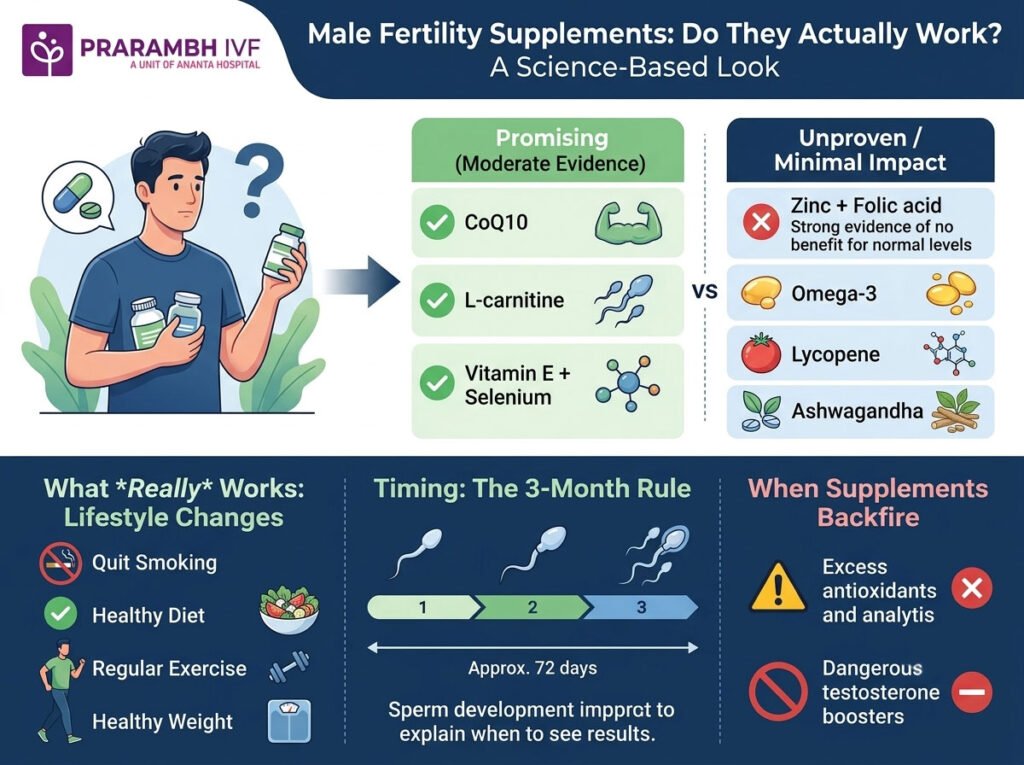
CoQ10 plays a key role in the energy production of cells, including the mitochondria in the sperm tail. Several randomised trials suggest that CoQ10 can improve sperm concentration and motility, especially in men with idiopathic (unexplained) low sperm quality. It is one of the better-supported options, though larger studies are still needed to confirm whether it increases live births.
Zinc and folic acid
For years, zinc and folate were considered a foundation of male fertility care. But a large, well-designed US trial (the FAZST study, published in JAMA in 2020) tested daily zinc plus folic acid in over 2,000 men and found no improvement in semen quality or live birth rates compared with placebo. Zinc deficiency is harmful, so correcting a true shortage still makes sense. But taking extra when your levels are already normal is unlikely to help.
L-carnitine and acetyl-L-carnitine
Carnitine helps move fatty acids into mitochondria for energy, and it is concentrated in the epididymis where sperm mature. Some studies report better motility with carnitine, particularly in combination with other antioxidants. Results are inconsistent, and the strongest benefits appear in men with a documented deficit in sperm movement.
Vitamin C, vitamin E and selenium
These classic antioxidants have shown modest benefits in some trials, mainly for motility and DNA damage. Selenium has the best support when used together with vitamin E. But more is not better. Very high doses can be counterproductive (see below).
Omega-3 fatty acids
Diets rich in omega-3 fats, such as those from fish, are linked with better sperm shape and concentration in observational studies. Supplement trials are limited, so a healthy diet is a safer place to start than a capsule.
Lycopene
Lycopene, a pigment found in cooked tomatoes and watermelon, has shown some benefit for sperm concentration and morphology in small studies. The evidence is preliminary.
Vitamin D
Low vitamin D is very common in India and is associated with lower semen quality in some studies. Correcting a proven deficiency is sensible for general health, but it isn’t a stand-alone fertility treatment.
Herbal products (ashwagandha, maca, fenugreek)
Small trials, some from India, suggest ashwagandha may improve sperm count and motility. However, studies are small and short, product quality varies, and long-term safety data are limited. Treat these as “promising but unproven”.
Quick Reference: Evidence at a Glance
| Supplement | Possible benefit | Strength of evidence |
|---|---|---|
| CoQ10 | Motility, concentration | Moderate (best-supported) |
| L-carnitine | Motility | Mixed |
| Vitamin E + Selenium | Motility, DNA protection | Modest |
| Zinc + Folic acid | None in men with normal levels | Strong evidence of no benefit |
| Omega-3 | Morphology, concentration | Limited |
| Lycopene | Concentration, shape | Preliminary |
| Ashwagandha, maca | Count, motility | Weak / small studies |
When Supplements Can Backfire
1. Excess antioxidants. Sperm need a small amount of reactive oxygen to function normally, for example during the final steps of fertilisation. Extremely high antioxidant doses may tip the balance too far the other way, a state sometimes called “reductive stress”.
2. Testosterone boosters and bodybuilding products. This is the most serious risk. Any product containing testosterone, anabolic steroids or hormone-like ingredients can shut down the brain signals (FSH and LH) that tell the testes to make sperm. Some men develop very low sperm counts, or even zero sperm, after using them. If you have used such products, tell your doctor. Sperm production often recovers, but it can take months.
3. Unregulated formulations. Supplements are less tightly regulated than medicines. Labels may not match contents, and some products have been found to contain undeclared substances.
4. Delaying proper diagnosis. This is the most common problem we see. A man takes supplements for six to twelve months while an underlying issue, such as a varicocele, hormonal imbalance, infection, or a genetic cause, goes untreated.
Why Timing Matters: The 3-Month Rule
Sperm take about 72–74 days to develop, plus extra time to mature and travel. Any change in supplements or lifestyle needs roughly three months before it can appear in a semen report. Judging a product after two weeks tells you nothing.
Lifestyle Changes That Often Work Better Than Pills
If we had to choose between a costly supplement stack and healthy habits, the habits would win. Strong evidence supports these steps:
- Quit smoking and tobacco. Smoking lowers count, motility and increases DNA damage.
- Limit alcohol. Heavy drinking reduces testosterone and sperm quality.
- Reach a healthy weight. Obesity alters hormones and raises scrotal temperature.
- Avoid excess heat. Long hours with a laptop on your lap, hot tubs, saunas and very tight underwear may reduce sperm quality.
- Exercise regularly but moderately. Extreme endurance training or steroid use can lower sperm quality.
- Eat a Mediterranean-style diet. Vegetables, fruits, nuts, whole grains and fish are linked with better semen quality; processed meat and sugary drinks are linked with worse.
- Sleep and stress. Poor sleep and chronic stress affect hormones.
- Manage medical conditions. Diabetes, thyroid problems and infections can all affect fertility.
Who Is Most Likely to Benefit from Supplements?
Supplements are most reasonable for men who:
- Have mildly abnormal semen parameters with no clear cause
- Have raised oxidative stress or DNA fragmentation on testing
- Have a proven nutritional deficiency (for example vitamin D or zinc)
- Are preparing for IUI or IVF and want to optimise sperm health
They are far less likely to help men with very low or absent sperm counts, blocked ducts, severe hormonal disorders, or genetic causes. Those situations require targeted medical treatment.
Test Before You Treat
A semen analysis is the starting point. The World Health Organization’s reference values for a healthy sample include roughly a concentration of at least 16 million sperm per mL, total motility of 42% or more, and normal forms of 4% or more. Values below these do not always mean infertility, and values above them do not guarantee fertility, but they tell your doctor where to look.
Depending on your results, your specialist may also recommend:
- Hormone tests (FSH, LH, testosterone, prolactin)
- A scrotal ultrasound to look for a varicocele
- Sperm DNA fragmentation testing
- Genetic tests if counts are severely low
- Infection screening
You can learn about our diagnostic options on our Semen Analysis service page and our Male Infertility Treatments page.
Medical Treatments That Go Beyond Supplements
When supplements are not enough, modern medicine offers proven options:
- Varicocele repair, which can improve sperm quality in selected men
- Hormonal therapy to stimulate sperm production when a specific deficiency is found
- Treating infections and reversing medication effects
- Sperm retrieval (TESA/TESE/micro-TESE) for men with no sperm in the ejaculate
- IUI (intrauterine insemination) for mild male factor. See our beginner guide to IUI treatment.
- IVF with ICSI, where a single healthy sperm is injected directly into an egg, often the best route when sperm parameters are poor.
Not sure which path suits you? Our comparison of IUI vs IVF explains the differences. And if you have already had a cycle that failed despite “normal” results, read why IVF fails even when reports are normal. For men who need to preserve sperm before cancer treatment or a medical procedure, ask about semen freezing.
How to Choose a Supplement Sensibly (If You Decide to Take One)
- Get tested first. Know your baseline semen analysis and vitamin levels.
- Talk to a fertility specialist before starting, especially if you take other medicines.
- Choose products with clear labels. Ingredient amounts should be listed, from a reputable manufacturer.
- Avoid “miracle” claims. No supplement guarantees pregnancy.
- Avoid anything with hormones or steroids.
- Give it three months, then repeat the semen analysis.
- Don’t stack many products at once. Overlapping doses raise the risk of excess.
Timeline: When to Stop Waiting and Seek Help
Do not wait for supplements to “kick in” if:
- You have been trying for 12 months without success (or 6 months if the woman is 35 or older)
- You have a history of undescended testes, groin surgery, infection or cancer treatment
- Your semen report shows very low count or no sperm
- You have pain, swelling or a lump in the scrotum
- You are experiencing erectile or ejaculation difficulties
Male and female factors often occur together, so both partners should be evaluated at the same time.
Frequently Asked Questions
Do male fertility supplements really increase sperm count?
Some can modestly improve count, motility or DNA quality in certain men, especially antioxidants like CoQ10. But results vary, and supplements cannot fix structural, genetic or hormonal causes.
How long should I take supplements before testing again?
Around three months, because sperm need about 72–74 days to develop.
Can supplements replace fertility treatment?
No. They can support sperm health but are not a substitute for diagnosis or treatment when a specific problem exists.
Are natural or herbal supplements safer?
Not automatically. “Natural” does not mean tested, regulated or free of side effects.
Can taking too many vitamins harm sperm?
Yes. Very high antioxidant doses may disturb the normal balance, and some vitamins are harmful in excess.
Is there a specific supplement to boost testosterone and fertility?
Be very cautious. Testosterone-containing products can reduce sperm production. Always check with a doctor first.
The Bottom Line
Male fertility supplements are not magic, but they aren’t useless either. A few, particularly CoQ10 and some antioxidant combinations, have reasonable evidence for improving sperm quality in selected men. Others, like zinc and folic acid for men who aren’t deficient, have not lived up to their reputation. The best results come when supplements are part of a bigger plan: proper testing, lifestyle changes, and medical treatment where needed.
If you have been taking supplements without answers, the most useful next step is a proper evaluation. Explore our full range of fertility services or browse more articles on our blog.
Book a Consultation with Prarambh IVF & Fertility Center
Our specialists provide complete semen analysis, advanced male infertility evaluation, and personalised treatment plans, from lifestyle guidance to IUI, IVF and ICSI. We aim to give you clear answers, not guesswork.
📍 Website: https://www.prarambhivf.com/
📧 Email: info@prarambhivf.com
Disclaimer: This article is for educational purposes only and is not a substitute for medical advice. Please consult a qualified fertility specialist before starting any supplement or treatment.
